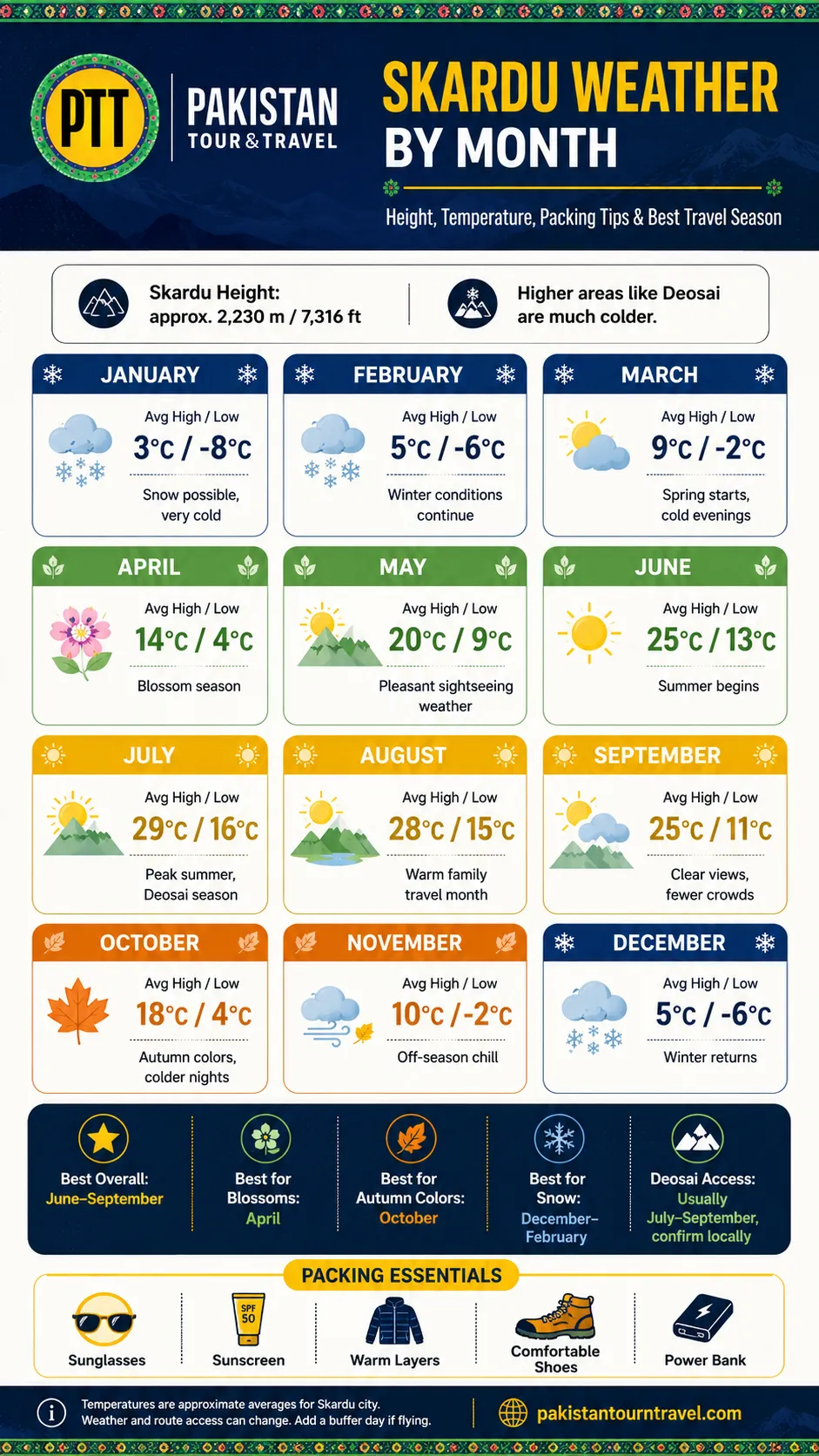
January Weather in Skardu
January is one of the coldest months in Skardu. Nights often drop below freezing, and snow is possible in the city and nearby areas. Roads can be icy in places, and higher routes are generally not suitable for casual sightseeing.
This is not the best month for first-time family travel unless you specifically want snow and are comfortable with winter conditions. Hotels may be quieter, crowds are low, and the scenery can be beautiful, but route flexibility is limited.
Pack for January: thermal innerwear, heavy jacket, gloves, wool cap, warm socks, waterproof shoes and moisturizer.
February Weather in Skardu
February is still winter. The weather remains cold, and high-altitude routes usually stay blocked or difficult. Skardu city may be accessible, but visitors should keep expectations realistic. You may not be able to cover all tourist spots as easily in summer.
This month suits travelers who prefer quiet surroundings and do not mind cold weather. For general tourism, it is better to wait until spring or summer.
Best planning advice: keep hotel plans flexible and avoid fixed high-route expectations.
March Weather in Skardu
March is a transition month. Winter slowly starts loosening its grip, but nights remain cold and the landscape may still feel bare in the early part of the month. Late March can show signs of spring, especially in lower-lying valley areas.
Travel in March can be rewarding for people who dislike crowds, but it is not fully predictable. Blossom timing changes each year depending on temperature and local conditions.
Good for: early spring travelers, quiet photography, budget-conscious visitors who can stay flexible.
April Weather in Skardu
April is one of the most beautiful months for travelers who want spring blossoms. Apricot and other fruit blossoms can turn parts of Baltistan into soft pink and white landscapes. This is one of the best months for photography, couples and travelers who enjoy peaceful seasonal beauty.
However, April is not the same as summer. Even if the daytime feels pleasant, evenings can be cold. Deosai and other high-altitude routes are usually not ready for normal tourist access.
Best for: blossom photography, couples, cultural sightseeing, Skardu city, Kachura side and Shigar side with local road confirmation.
Packing note: bring both light daytime clothes and warm evening layers.
May Weather in Skardu
May feels more comfortable for sightseeing. Days are longer and warmer, and road access generally improves compared to March and April. This is a good month for travelers who want to avoid peak summer crowds but still enjoy pleasant conditions.
Some higher routes may still be limited, so do not assume everything is open. Deosai access especially depends on snow clearance and local confirmation.
Good for: families, couples, relaxed sightseeing, lakes, Shigar, Khaplu and soft nature routes.
June Weather in Skardu
June is when the main Skardy travel season becomes stronger. The weather is warmer, days are long, and more routes become practical. For many travelers, June is one of the best months because it offers a good balance of access, weather and daylight.
Skardu city can feel warm during the day, but evenings remain cooler. Deosai may start becoming accessible depending on snow clearance, but opening dates are not fixed every year.
Good for: family holidays, road trips, lake visits, Shigar, Khaplu, Basho and early adventure planning.
Important: even in June, carry a jacket if you plan to go toward Deosai or any higher area.
July Weather in Skardu
July is peak summer in Skardu and one of the busiest tourist months. Days are warmer, hotels are more active, and most travelers find this month easier for sightseeing. Deosai is usually more accessible in July than in spring, but travelers should still confirm road conditions before finalizing plans.
This is a strong month for families because children usually have school holidays, routes are more active, and hotels, restaurants, and transport services are easier to arrange.
The downside is crowding and higher demand. Flights can fill quickly, hotel prices can rise, and popular places like Kachura, Shangrila side and Shigar can feel busier.
Good for: families, Deosai, lakes, summer sightseeing and first-time visitors.
August Weather in Skardu
August continues the summer travel season. It is still one of the most practical months for families and general tourists. Days can feel warm in Skardu city, but you still need layers for evenings and high-altitude routes.
Road and weather checks remain important. Rain, clouds or local road issues can affect plans, especially if you are traveling by road from Islamabad or moving toward higher areas.
Good for: family trips, lake routes, Deosai if open, Shigar, Khaplu and relaxed sightseeing.
Travel tip: book flights and hotels early for August because it remains a popular travel period.
September Weather in Skardu
September is one of the most balanced months to visit Skardu. The peak summer crowd starts reducing, views are often clearer, and the weather is still manageable for many routes. Evenings become cooler, but daytime sightseeing is usually comfortable.
For couples and photographers, September can be better than July or August because the valley feels calmer. Deosai may still be accessible in many years, but this depends on the weather and road conditions.
Good for: couples, photographers, adventure travelers, quieter family trips, and clear mountain views.
October Weather in Skardu
October is the autumn season in Skardu. Trees turn golden, valleys become photogenic, and the landscape takes on a different mood. It is one of the best months for photography, especially for travelers who prefer color, soft light and fewer crowds.
But October is not summer. Evenings are cold, days are shorter, and higher routes can become risky later in the month. Deosai access should never be assumed in October.
Good for: autumn photography, couples, quiet sightseeing, cultural travel, and scenic drives.
Pack carefully: warm jacket, thermal layer for nights, comfortable shoes, and sun protection for daytime.
November Weather in Skardu
November has an off-season feel. The weather turns colder, the trees lose color, and winter preparations begin. Some hotels and services may reduce activity compared to summer.
This month can suit budget travelers or people who want quiet travel, but it is not the best choice if you want full access to all tourist routes.
Good for: quiet city stays, budget travel, and travelers who understand limited access.
Not ideal for: Deosai, high-altitude routes, first-time family holidays or packed sightseeing plans.
December Weather in Skardu
December brings winter conditions. Snow becomes more likely, nights are freezing, and high-altitude routes are usually unsuitable for normal tourist travel. Skardu city can still be visited, but travel should be planned around cold weather, shorter days, and possible flight or road disruptions.
This is a month for snow lovers, not for travelers expecting easy sightseeing.
Good for: winter photography, quiet travel, snow experience and off-season stays.
Packing must include: proper winter shoes, thermals, heavy jacket, gloves, wool cap and layered clothing.
Best Time for Different Types of Travelers
The best time to visit Skardu is not the same for everyone. A family with children, a couple, a photographer, and a trekker may all need different months.
Families: June to August
Families usually prefer June, July, and August because the weather is warmer, services are active, and most normal sightseeing routes are easier to manage. Children also handle the trip better when days are longer and evenings are not extremely cold.
Best family-friendly months:
- June
- July
- August
- Early September
Families should avoid overloading the first day, especially if flying directly from Islamabad to Skardu. Keep arrival day light and plan one route per day.
Couples: April, September and October
Couples often prefer months that feel scenic but not too crowded. April offers blossoms, September offers clear views and calmer weather, and October brings autumn colors.
Best couple-friendly months:
- April for spring blossoms
- September for peaceful weather
- October for autumn scenery
These months are ideal if you want photography, quiet hotel stays and relaxed sightseeing instead of peak-season rush.
Photographers: April and October
For photographers, April and October are standout months.
April brings blossoms, soft spring colors and fresh valley views. October brings golden trees, dramatic light and autumn landscapes. September is also excellent for clearer mountain views and less crowd pressure.
Best photography months:
Bring extra batteries and a power bank because cold evenings can drain camera and phone batteries faster.
Adventure Travelers: June to September
Adventure travelers usually need better route access. June to September is the most practical window for high routes, trekking approaches, Deosai, Basho and longer valley exploration.
Best adventure months:
- June
- July
- August
- September
Still, never assume that a route is open just because it is summer. Mountain roads can change after rain, landslides or snowmelt.
Budget Travelers: Shoulder Months
Budget travelers may find better value outside peak summer. March, April, October and November can be more affordable than July and August, but services and route access vary.
Best budget-style months:
- March, if you are flexible
- April, before peak summer
- October, after peak rush
- November, for quiet off-season travel
Budget travelers should confirm hotel heating, transport availability and road status before booking.
Snow Lovers: December to February
If you want snow, winter is the right season. December, January and February are the main snow months, but they also come with the most limitations.
Best snow months:
- December
- January
- February
Winter travelers should not expect full Skardu access. Plan around cold weather, possible delays and limited high routes.
What to Pack for Skardu by Season
A good Skardu packing guide should start with one rule: pack in layers. Skardu weather changes between day and night, and your clothing should adjust with it.
Spring Packing List for Skardu
Spring months: March, April and May
Spring can feel pleasant during the day and cold at night. April is especially popular for blossoms, but travelers often underestimate the evening chill.
Pack:
- Light jacket for daytime
- Warm jacket for evenings
- Full-sleeve shirts
- Comfortable trousers
- Walking shoes
- Sunglasses
- Sunscreen
- Moisturizer
- Lip balm
- Power bank
- Light gloves if traveling in March or early April
- Camera or phone storage for blossom photography
Avoid packing only summer clothes. Spring in Skardu is not the same as spring in lowland cities.
Summer Packing List for Skardu
Summer months: June, July and August
Summer is the easiest season, but it still needs smart packing. Skardu city may feel warm during the day, while Kachura, Shigar or Khaplu can be pleasant. Deosai and higher areas remain colder.
Pack:
- Light cotton shirts for daytime
- Fleece or light jacket for evenings
- Windbreaker for higher routes
- Comfortable walking shoes
- Sunglasses
- Sunscreen
- Cap or hat
- Reusable water bottle
- Power bank
- Basic medicine
- Snacks for long drives
- Light rain jacket if traveling in cloudy periods
- Warm layer for Deosai
For Deosai, do not rely on Skardu city weather. Carry warmer clothing even if the city feels sunny.
Autumn Packing List for Skardu
Autumn months: September, October and November
Autumn is beautiful but colder than many people expect. September is still comfortable, October gets cold in the evening, and November begins to feel like winter.
Pack:
- Warm jacket
- Fleece or sweater
- Full-sleeve shirts
- Thermal layer for October/November
- Comfortable shoes
- Sunglasses
- Sunscreen
- Wool cap for evenings
- Moisturizer and lip balm
- Power bank
- Camera gear for autumn colors
If visiting in late October or November, ask your hotel about heating before booking.
Winter Packing List for Skardu
Winter months: December, January and February
Winter packing needs to be serious. Do not travel to Skardu in winter with only a casual jacket.
Pack:
- Thermal innerwear
- Heavy winter jacket
- Sweaters or fleece layers
- Waterproof or snow-friendly shoes
- Warm socks
- Gloves
- Wool cap
- Neck warmer or muffler
- Moisturizer
- Lip balm
- Sunglasses for snow glare
- Power bank
- Personal medicines
- Hot water bottle if needed
- Extra batteries for camera gear
Winter travelers should also keep flexible travel dates because flights and roads may be affected by weather.
Weather Risks Travelers Should Know
Skardu is safe and beautiful when planned properly, but mountain weather should never be taken casually.
Flight Delays and Cancellations
Flights to Skardu are scenic but weather-dependent. Cloud cover, low visibility, rain or mountain weather can delay or cancel flights. This is one of the biggest reasons travelers should keep a buffer day. If you are flying back from Skardu, avoid scheduling an international flight or important event on the same day.
Sudden Rain or Snow in Skardy
Weather can change quickly in mountain areas. A sunny morning does not always guarantee a clear evening, especially in spring, autumn, and winter. Carry a light rain layer in spring/summer and proper warm layers in autumn/winter.
Skardu Road Closures
Roads can be affected by landslides, snow, rain, construction, or seasonal closures. This applies to the Islamabad-Skardu route as well as local routes toward Deosai, Basho, and other higher areas. Before traveling by road, check local updates. For a detailed route comparison, read our Islamabad to Skardu road and flight guide.
Cold Nights Even in Warmer Months
Many travelers pack for the daytime and forget the night. This is a mistake. Even in June, July, and August, nights can feel cool, especially near lakes, rivers, and higher viewpoints. Always keep at least one warm layer in your day bag.
Deosai and Higher Routes Need Confirmation
Deosai, Basho, and other higher or rougher routes should never be planned based solely on old photos online. Conditions change every year and sometimes every week. Ask your hotel, driver, or local tour operator before finalizing the day.
Best Time to Visit Deosai From Skardu
Deosai is not the same as Skardu city. Skardu city is already high, but Deosai is much higher, sitting at around 4,114 meters on average. That means it is colder, windier, and more seasonal.
The best time to visit Deosai from Skardu is usually July to September, with July and August being the strongest months in many years. June is possible if the route opens after snow clearance, but it is not guaranteed. October may be possible early in some years, but it becomes risky as temperatures drop and snowfall chances increase.
For practical planning: