The road distance varies slightly depending on your exact starting point in Islamabad and the route you take, which varies seasonally. Travel time matters far more than distance on mountain roads, it is a 630 km road journey through the Karakoram that bears no resemblance to 630 km on a motorway.
Islamabad to Skardu by Air: Flight Time and Schedule
The Islamabad to Skardu flight takes approximately 1 hour to 1 hour 15 minutes. Flights are almost always scheduled in the morning, and mountain visibility and wind conditions are generally more stable earlier in the day, which is why airlines avoid afternoon departures on this route.
PIA and Airblue both operate direct flights on the Islamabad–Skardu sector. Schedules shift by season and demand, so always verify current availability on the airline website or a booking platform before planning hotels or transport around a specific departure.
Budget PKR 25,000–45,000 one-way per person as a safe planning number. Peak travel dates are Eid holidays and summer school breaks, which sell out quickly and command higher fares. Additional costs to factor in:
Skardu airport transfer to city: PKR 1,500–4,000 locally, higher for pre-booked private vehicles
Checked baggage: some lower fares exclude it, so always check before paying, especially if you’re carrying trekking gear, warm layers or camera equipment
The Cancellation Reality of Skardu Flights
This is the most important thing to understand about flying to Skardu: cancellations happen regularly. The flight corridor passes through high-altitude mountain terrain. Even when Islamabad is perfectly clear, Skardu may be fogged in, or the mountain passage may have unfavourable winds. Delays and cancellations occur across all seasons, including summer.
The rule is simple: never schedule a critical commitment, an international connection, a wedding, or an office deadline on the same day as your return flight to Skardu. Always build in one buffer day. This single habit prevents most travel stress on this route. Flying makes the most sense for:
- Families with children
- Senior travelers
- Couples on short 4–6 day holidays
- Anyone who wants maximum time in Skardu rather than in transit.
If you are weighing your options, our Islamabad to Skardu tour packages by air handle flights, airport transfers and flexible backup planning so you are covered if weather interrupts your schedule.
Islamabad to Skardu by Road
The standard Skardu to Islamabad route follows this path:
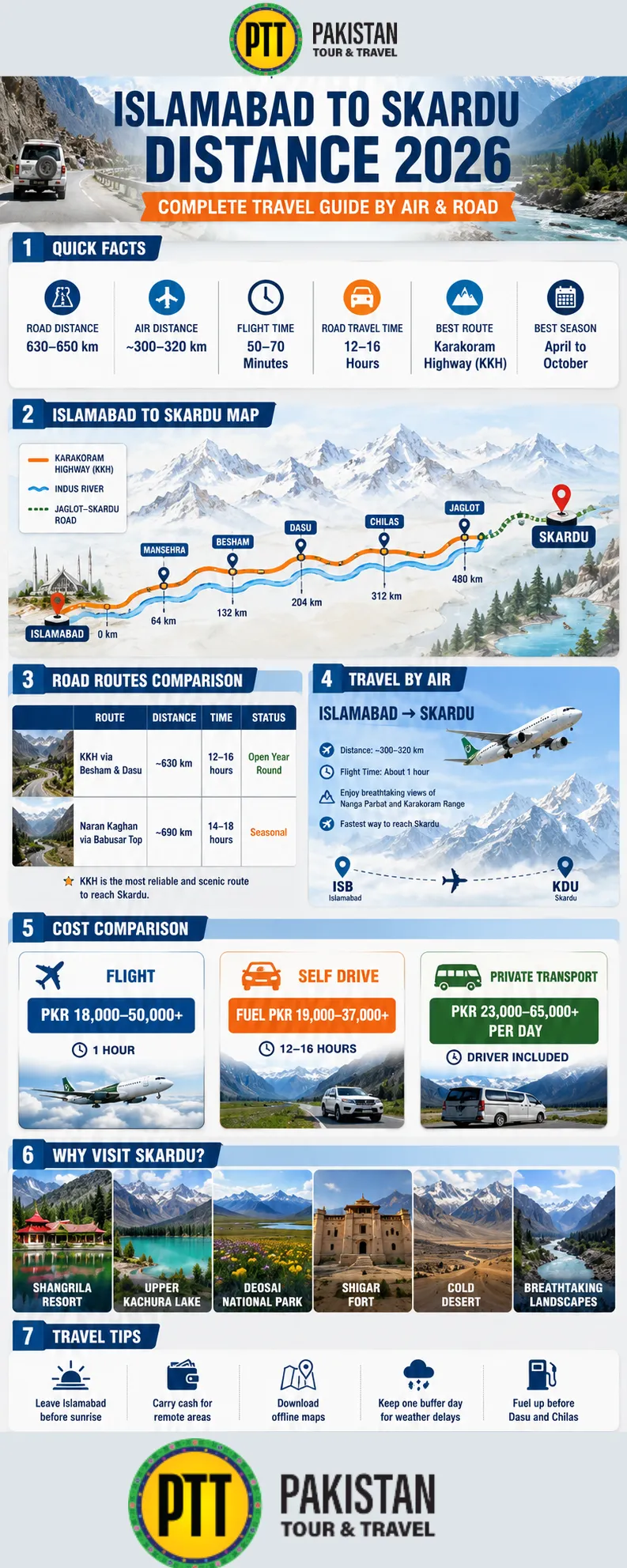
Complete guide of Skardu from Islamabad Distance – routes and flight schedule
Islamabad → Hazara Motorway → Mansehra → Besham → Dasu → Chilas → Jaglot → Jaglot–Skardu Road → Skardu
In summer, when Babusar Pass is open, some travelers use the scenic Naran–Babusar–Chilas alternative. This route is beautiful but seasonal, it can close without much notice due to snow, rockfall or road repairs. In shoulder months and winter, the KKH side through Mansehra is the dependable choice.
The two-day plan is almost always the right call for families. A recommended split:
- Day 1: Islamabad to Chilas (or Besham)
- Day 2: Chilas to Skardu
This keeps driving hours manageable, avoids fatigue-related risk on mountain bends, and makes the journey genuinely enjoyable rather than an endurance event.
Road Sections Explained
Islamabad to Mansehra: The smoother opening leg. Start before sunrise or just after Fajr to clear city traffic and bank daylight hours for the mountain sections ahead.
Mansehra to Chilas: This is where the journey becomes a proper mountain road trip. Bends tighten, trucks slow progress, and the landscape turns dramatic. Take meal breaks here, not just fuel stops.
Chilas: A key landmark and the most common overnight stop for road travelers. If you are splitting the journey over two days, this is where most families and groups break.
Jaglot to Skardu: The final section and arguably the most beautiful. The road has improved significantly in recent years, but still demands respect. Landslides, falling rocks and rain-related closures can affect it. Never rush this stretch.
Private Transport vs Self-Drive
For most tourists, hiring a driver is worth the cost. Mountain road rhythm, safe overtaking points, fuel knowledge and night-driving avoidance are all things experienced local drivers manage instinctively.
Self-driving is possible for confident drivers who know mountain roads, but it carries real risk if you are traveling with children, in poor weather, or with a vehicle that is not properly maintained.