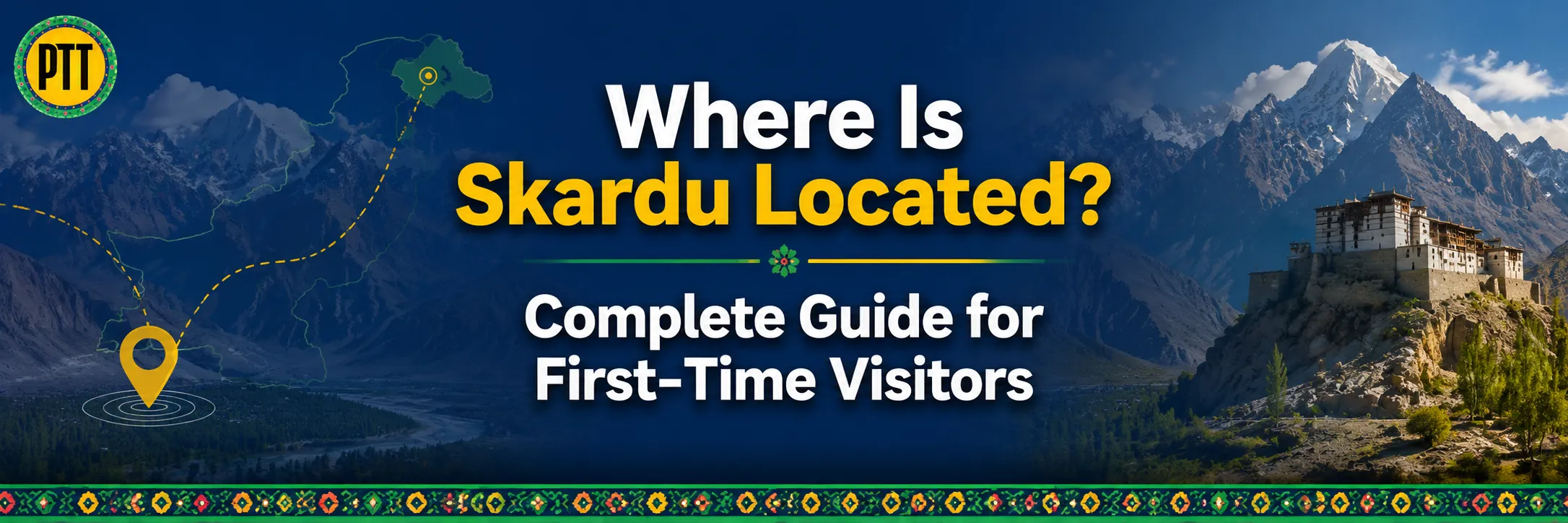
Skardu is often searched as “Skardu in Pakistan,” “Skardu Gilgit Baltistan,” “Skardu location,” and “where is Skardu valley.” All of these searches refer to the same broad travel region in northern Pakistan.
Is Skardu a City, Valley or District?
This is one of the most common points of confusion for first-time visitors. People use the word “Skardu” in different ways, depending on the context.
Skardu city is the main town and travel base. This is where many hotels, restaurants, markets, transport services and airport access points are located. If someone says they are staying in Skardu, they usually mean Skardu city or a nearby hotel area.
Skardu Valley refers to the broader valley landscape around the city. It includes the natural setting, rivers, mountain views and nearby sightseeing routes. When travelers talk about the beauty of Skardu, they are often talking about the wider valley, not only the city center.
Skardu District is the administrative area. It includes several tourist destinations and surrounding valleys. This is why you may see different nearby places described as part of Skardu District even if they are not inside the main city.
For travel planning, it is easiest to think of Skardu city as your base, Skardu Valley as the surrounding scenic area, and Skardu District as the wider administrative region.
Where Is Skardu on the Map of Pakistan?
On the map of Pakistan, Skardu is located in the far north, inside Gilgit-Baltistan. It is northeast of Islamabad and southeast of Gilgit. It is also connected with other important areas of Baltistan, including Shigar and Khaplu.
Skardu is not close to Pakistan’s major cities in the way Lahore, Islamabad or Karachi are close to each other by motorway. It is a mountain destination, so distance and travel time feel different here. A place may look close on the map, but mountain roads, turns, weather and road conditions can make the journey longer.
Skardu’s location is important because it connects travelers with several famous areas:
Islamabad is the main starting point for most visitors. Gilgit is another major city in Gilgit-Baltistan, but it is a separate travel base from Skardu. Hunza is in the Gilgit side of the region and is not next to Skardu, although many travelers combine both destinations in longer northern Pakistan trips. Astore is important for access toward Deosai from another side. Shigar and Khaplu are closer to Skardu and are commonly visited during Skardu-based travel.
For your website, this is also a good place to add an original map image or an embedded Google Map showing Skardu’s position in Gilgit-Baltistan. A simple custom map with labels for Islamabad, Gilgit, Hunza, Shigar, Khaplu and Deosai can help visitors understand the region quickly.
What Region Is Skardu Part Of?
Skardu is part of the Baltistan region of Gilgit-Baltistan. Baltistan is known for its mountain culture, Balti language, old forts, river valleys and strong hospitality. The local language is Balti, while Urdu is widely understood and English is also used in hotels, tourism offices and by many people working with travelers.
The culture in Skardu feels different from big cities in Pakistan. Life is slower, the landscape is more open, and local traditions are closely connected with the mountain environment. Visitors usually notice the calm atmosphere, simple food, dry mountain air and warm behavior of local people.
For first-time visitors, it is good to remember that Skardu is not a commercial hill station. It is a real mountain region where weather, local customs and road conditions matter. Respecting the local culture, dressing modestly in public areas and asking permission before photographing people are simple ways to travel responsibly.
What Is Near Skardu?
Skardu’s location makes it a practical base for exploring several nearby natural and cultural places. These places are spread in different directions, so planning them area-wise is better than trying to cover everything in one day.
Kachura Lakes are among the most searched places near Skardu. The area is known for clear water, mountain views and peaceful surroundings. Upper Kachura Lake gives a more natural feel, while Lower Kachura, also known by many travelers as Shangrila Lake, is popular for photos and family visits.
Shangrila Lake is located in the Kachura area and is one of the most recognized travel spots near Skardu. Many first-time visitors search for it because of its lakeside setting and easy access compared to more remote areas.
Sadpara Lake is another important lake near Skardu. It is often visited because it is relatively close to the city and gives travelers a quick introduction to Skardu’s mountain lake scenery.
Shigar Valley lies near Skardu and is known for its historic fort, river views and peaceful village landscape. It is one of the easier valley trips from Skardu and works well for visitors who want culture and scenery together.
Khaplu Valley is farther than Shigar but highly rewarding for travelers with more time. It is known for its palace, views and traditional Baltistan atmosphere. Because of the travel time, it is better planned as a full-day or overnight visit.
Katpana Cold Desert is one of the most unusual landscapes near Skardu. It has sand dunes surrounded by mountains, which makes it different from the warm deserts people usually imagine. In winter, the area can become even more dramatic when snow appears around the dunes.
Deosai National Park is one of the most famous high-altitude areas accessible from Skardu in the summer season. It is known for wide open plains, Sheosar Lake, wildflowers, marmots and a completely different landscape from Skardu city. Because Deosai is high and seasonal, travelers should always confirm access before planning it.
These nearby areas show why Skardu’s location is so valuable. From one base, visitors can experience lakes, valleys, history, desert and alpine plains.
How Do Travelers Reach Skardu?
Travelers usually reach Skardu in two main ways: by air or by road.
The fastest way is by flight to Skardu International Airport. Flights usually operate from major Pakistani cities depending on airline schedule and season, with Islamabad being the most common starting point. However, mountain flights can be affected by weather, visibility and operational conditions. This is why travelers should avoid planning a very tight schedule around a Skardu flight. A buffer day is always a smart idea.
The second option is to travel Skardu by road from Islamabad. The road journey is long and scenic, passing through northern mountain areas. It gives travelers more flexibility and a stronger road-trip experience, but it also requires patience. Road conditions can change because of weather, landslides, maintenance work or seasonal traffic.
For first-time visitors, flying is easier if you have limited time, while road travel is better if you enjoy long scenic journeys and have extra days. Families with children and senior travelers usually prefer flights when available, but many adventure travelers choose the road for the experience.
This article is only giving a basic travel orientation. For detailed road distance, route options and travel time, you can read our guide on how to reach Skardu from Islamabad.
Why Skardu’s Location Makes It Special?
Skardu is special because it sits between several types of landscapes that are rarely found so close to each other. In one region, you can see blue lakes, dry mountains, river valleys, old forts, cold desert, alpine plains and routes toward some of the highest mountains in the world.
For families, Skardu offers relaxed sightseeing, open spaces and memorable lake views. For couples, it gives quiet stays, scenic drives and peaceful photography points. For adventure travelers, Skardu is an important base for trekking, mountain routes and remote valley exploration. For photographers, the changing light, clear skies and mix of desert, water and mountains make it a very rewarding destination.
Another reason Skardu’s location matters is that it gives travelers access to different travel moods. One day can be easy and slow around Kachura or Sadpara. Another day can feel cultural in Shigar or Khaplu. A summer day toward Deosai can feel completely wild and open. This variety is one of the main reasons people return to Skardu after their first visit.
First-Time Visitor Tips Before Planning Skardu
Skardu is beautiful, but it is still a high-altitude mountain destination. Planning it like a normal city break can lead to stress. A few simple decisions can make your first trip smoother.
Keep at least one buffer day if you are flying. Flights to mountain airports can change because of weather, and a flexible plan helps you avoid missing your next booking.
Check the weather before departure. Skardu can be warm during the day and cold in the evening, especially outside peak summer. Higher areas such as Deosai are colder than Skardu city, even when the city feels pleasant.
Pack layers instead of only summer clothes. A light jacket, comfortable shoes, sunglasses, sunscreen and basic medicine are useful for most travelers. If you are visiting in spring, autumn or winter, warmer clothing becomes more important.
Choose your route according to the season. Summer is usually better for full access to high-altitude areas. Spring is good for blossoms and softer scenery. Autumn is loved for colors and clear views. Winter can be beautiful but more limited because of snow and road conditions.
Book early in peak season. Summer months can be busy, especially around school holidays and long weekends. Hotels, transport and flights can become harder to manage if you plan everything at the last minute.
Also, respect local life. Skardu is welcoming, but it is not just a tourist backdrop. Dress modestly in public places, avoid loud behavior in villages, do not leave waste near lakes or viewpoints, and ask before taking close photos of local people.
A Simple First-Time Skardu Plan
This is not a full itinerary, but it can help beginners understand how Skardu is usually experienced.
On the first day, most travelers settle into Skardu city, visit the local bazaar, enjoy nearby viewpoints and keep the day light. This is useful because travel to Skardu, whether by air or road, can be tiring.
On the second day, travelers often explore the Kachura side, including Upper Kachura Lake and Shangrila Lake. These places are good for families, couples and first-time visitors because they are scenic and easier to manage.
On the third day, visitors can choose between a cultural valley experience such as Shigar or a nearby natural stop like Sadpara and Katpana, depending on weather, season and interest. If you have more days and it is the right season, Deosai or Khaplu can be added with better planning.
For a more organized route with transport, hotels and local guidance, you can browse our curated itineraries to Find Your Perfect Skardu Trip. However, this is more helpful if you are visiting Skardu for the first time and want a beginner-friendly plan without handling every detail yourself.
Final Advice for First-Time Visitors
Skardu is located in Gilgit-Baltistan, northern Pakistan, in the Baltistan region. It is a mountain travel base, a cultural center and a gateway to some of the most beautiful landscapes in Pakistan. Its location matters because it affects how you travel, what you pack, which places you can visit, and how flexible your plan should be.
If you are visiting for the first time, do not rush Skardu. Give yourself enough time to adjust, enjoy the views slowly and understand the distances between different areas. Skardu is best experienced with a realistic plan, respect for local conditions and a little flexibility.
To understand the area better before finalizing your trip, you can also read our guide on Skardu map and nearby tourist areas.
FAQs About Skardu Location
Where is Skardu located in Pakistan?
Skardu is located in Gilgit-Baltistan, in the northern part of Pakistan. It is part of the Baltistan region and works as a main travel base for nearby valleys, lakes, deserts and mountain areas.
Is Skardu in Kashmir or Gilgit-Baltistan?
Skardu is in Gilgit-Baltistan, Pakistan. Travelers should not confuse it with Azad Kashmir. It belongs to the Baltistan region of Gilgit-Baltistan.
Is Skardu near Hunza?
Skardu and Hunza are both in Gilgit-Baltistan, but they are not next to each other. Hunza is usually accessed from the Gilgit side, while Skardu is in the Baltistan side. Many travelers combine both in longer trips, but they require separate travel planning.
Is Skardu safe for first-time visitors?
Skardu is generally considered welcoming for tourists, especially in the main city and common tourist areas. First-time visitors should still travel responsibly, check weather and road conditions, use reliable transport, respect local culture and avoid risky movement at night on unfamiliar mountain roads.
Which airport is closest to Skardu?
The closest airport is Skardu International Airport. It serves Skardu city and the surrounding region. Flight schedules can change due to weather and operational conditions, so travelers should confirm their flight before departure and keep some flexibility in their plan.