Why Skardu Feels Different From Every Other Place in Pakistan?
There are many beautiful places in Pakistan, but Skardu has a different feeling. The moment you enter this region, the air changes, the mountains become bigger, and life suddenly slows down. People do not just come to Skardu for sightseeing anymore. They come here to disconnect from busy routines, experience peaceful mornings, and witness landscapes that, in person, honestly do not look real.
Over the last few years, Skardu has become one of the most visited travel destinations in Pakistan. Families, honeymoon couples, photographers, bikers, foreign travellers, and adventure lovers now choose Skardu because it offers everything in one trip. You can sit beside crystal-clear lakes in the morning, cross cold deserts during sunset, enjoy local Balti food at night, and wake up to snow-covered mountains the next day.
What makes Skardu even more special is that every valley here has its own personality. Some places are peaceful and quiet, while others feel wild and adventurous. One road takes you toward green villages and waterfalls, while another road leads you into rocky mountains and massive glaciers. If you are planning your first trip to Gilgit Baltistan, Skardu is honestly one of the best places to start.
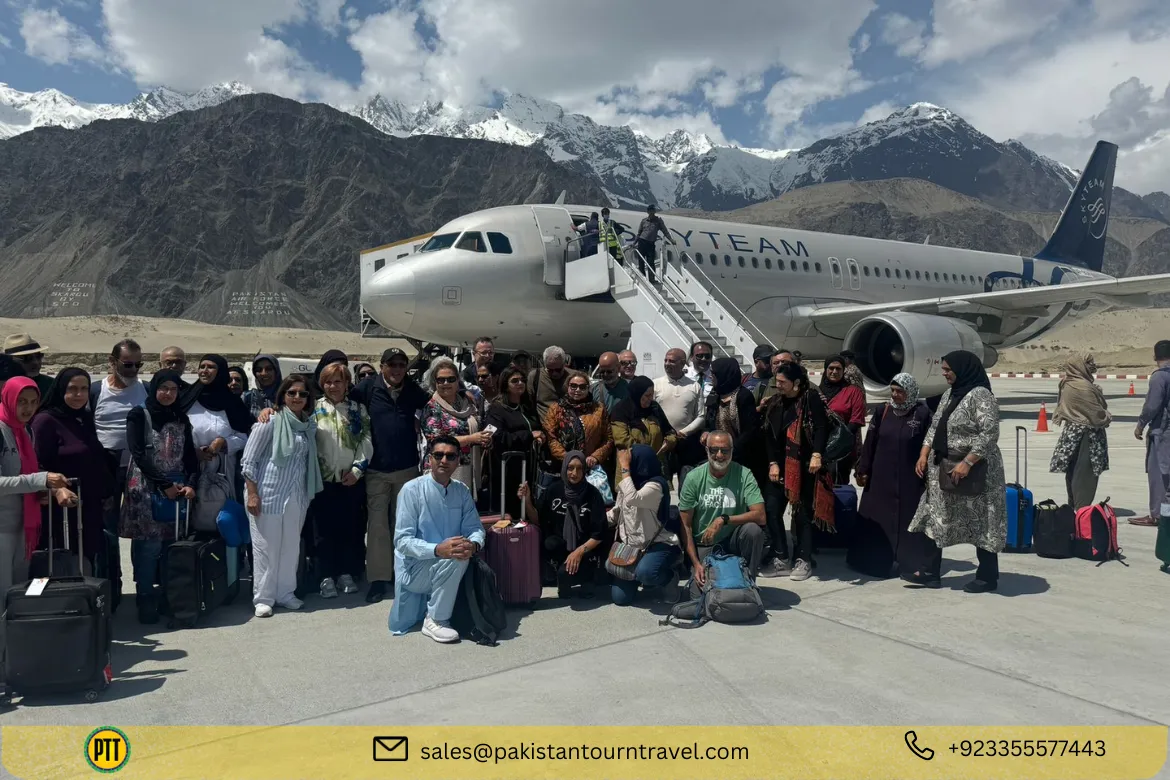
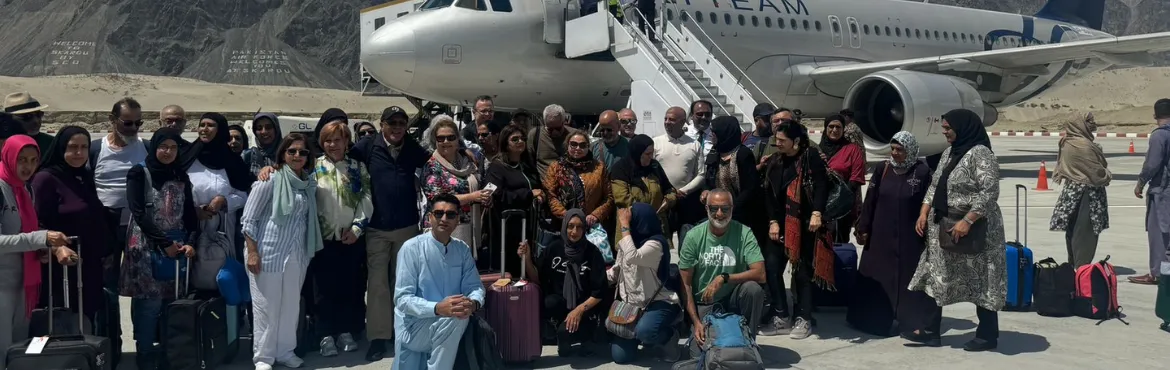
The most scenic airport in the world, Skardu Airport
Major Must-Visit Places in Skardu 2026
1. Shangrila Resort and Lower Kachura Lake: “Heaven on Earth”
Ask a first-time visitor what they want to see in Skardu, and many will say, “Take me to Shangrila.” Locally, this area is tied to the nickname “Heaven on Earth,” and when the lake is still, the red-roofed resort cottages reflect in the water like a postcard. Lower Kachura Lake, commonly called Shangrila Lake, sits near Skardu at roughly 2,500 meters above sea level. The resort beside it has been operating since 1983 and is one of the classic symbols of tourism in northern Pakistan.
Why visit Shangrila Resort? The lake is calm, photogenic, and easy to reach. It is perfect for families, couples, first-time travelers, and anyone who wants beauty without a tough trek. The famous aircraft-restaurant story is also part of the local charm: guides often point it out as proof that Skardu turns even accidents and old memories into something meaningful.
How to reach: From Skardu city, drive toward Kachura village. The road is mostly manageable by car in normal weather. It usually takes 35–45 minutes, depending on traffic, stops, and road conditions.
Local guide tip: Go early in the morning for clean reflections. By midday, tour groups arrive, and the lake gets busier. For photos, do not only stand near the main resort entrance. Walk a little around the lake edge and frame the red roofs with trees in the foreground.
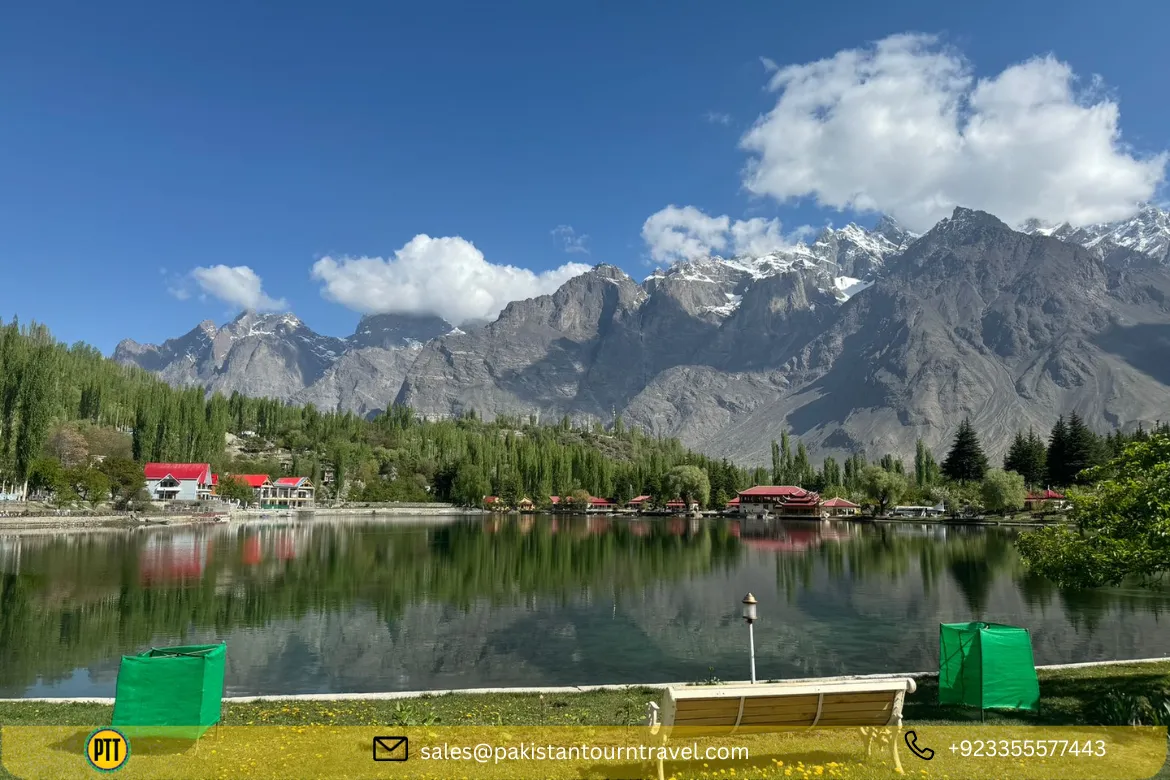
Shangrila Skardu
2. Upper Kachura Lake: The Wilder Sister of Shangrila
Upper Kachura Lake feels more natural and less polished than Shangrila. The water is deep blue-green, the mountains stand close, and in summer, you may see families boating while children eat fresh apricots from nearby orchards. Furthermore, Upper Kachura is roughly 30 km from Skardu, about 45 minutes by jeep or taxi, followed by a short walk down toward the lake.
What to do at Upper Kachura Lake? Boating is the main activity, but the real joy is slow travel. Sit near the bank, order tea or trout if available, and listen to the wind moving through the trees. In late spring and summer, the orchard setting makes the lake feel like a hidden bowl of color.
Older villagers often say the Kachura lakes change mood with the sky. A cloud passes, and the water turns silver. Sunlight returns, and the lake becomes blue again. This is why locals tell photographers to wait rather than rush.
How to reach: Drive from Skardu to Kachura. After parking, walk down the local path toward the lake. Wear shoes with grip because the path can be dusty or slippery after rain.
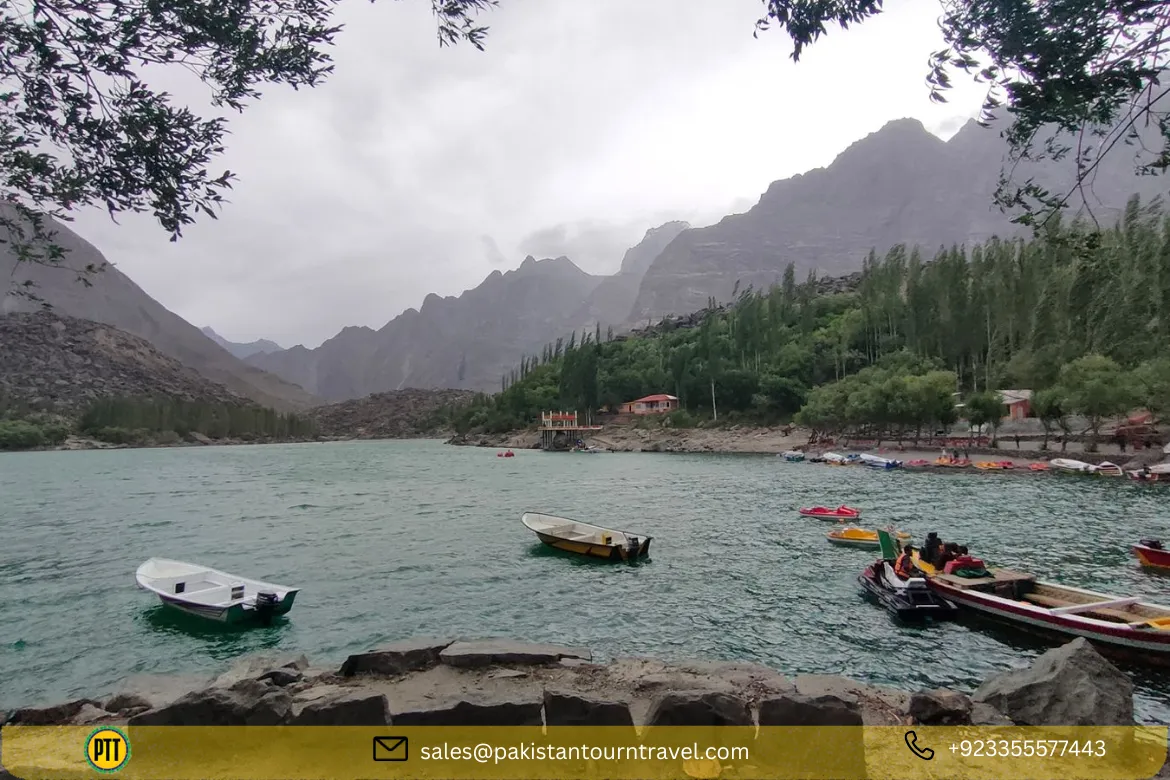
Upper Kachura Lake, a must-visit place in the Skardu tour,
3. Sadpara Lake: Skardu’s Beautiful Lifeline
Sadpara Lake is not just a scenic stop. It is one of the most important water sources for Skardu. Sadpara Dam (some pronounced it as SAT-PARA) and the lake system help provide drinking water and irrigation to the valley; the project provides 3.1 million gallons per day of potable water.
The lake itself sits just south of Skardu, surrounded by rugged mountains. On a clear day, the water can look turquoise near the edges and deep blue in the center.
Why visit Satpara Lake? It is close, quiet, and perfect for a half-day trip. If your flight arrives early and you want a gentle first outing, Satpara is one of the best places to start your Skardu travel guide itinerary.
How to reach: Drive 20–30 minutes from Skardu city toward Sadpara village. The road is short, but check current conditions in winter or after rain.
Insider tip: Visit in the morning or late afternoon. The light is softer, the wind is usually calmer, and the lake looks better in photos. Bring a light jacket even in summer because the wind near the water can feel sharp.
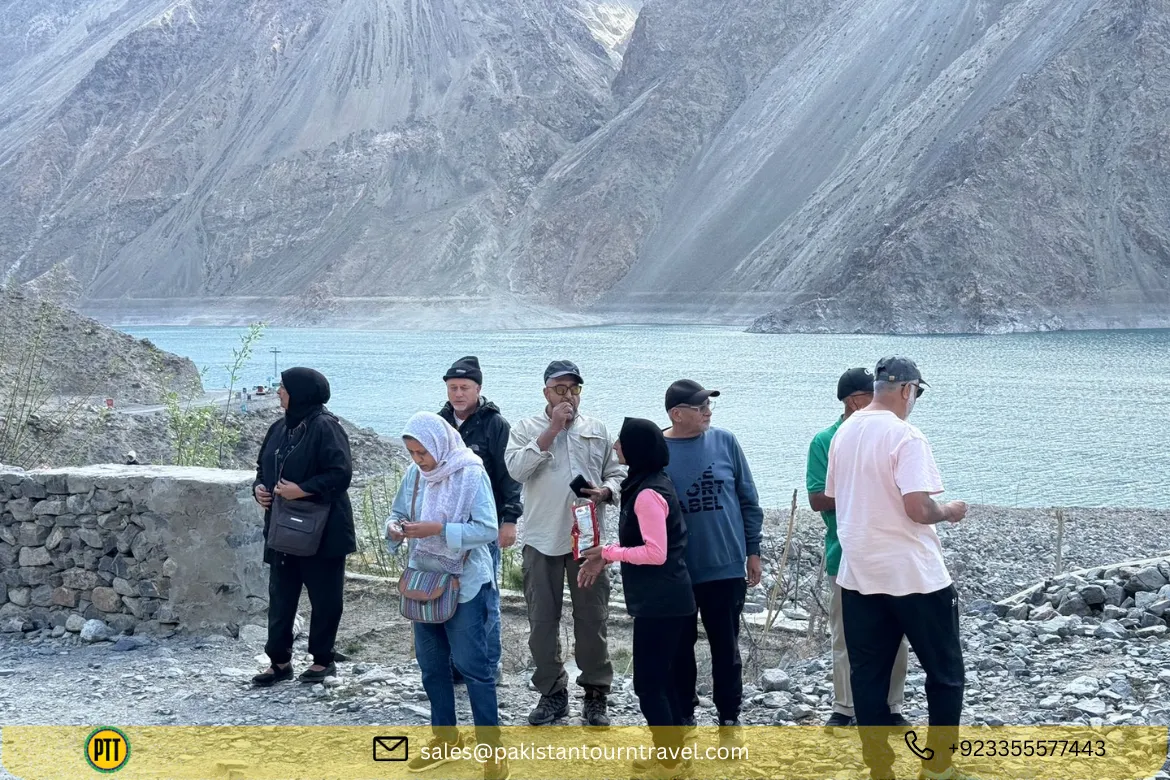
Sadpara Lake – the most beautiful lake in Pakistan
4. Deosai National Park: Land of Giants
Deosai is where Skardu stops feeling like a valley and begins to feel like another planet. The name is often translated as “Land of Giants,” and locally it is also associated with “Ghbiarsa,” meaning “summer place.” Deosai is the high-altitude alpine plain at an average elevation of 4,114 meters, famous for Himalayan marmots, brown bears, and wildflowers.
Moreover, UNESCO’s tentative listing describes Deosai National Park as an alpine plateau ranging roughly from 3,500 to 5,200 meters and covering about 358,400 hectares. We have amazing deals and discounts on Deosai Tour. Book today and get the perfect deal for you and your family.
What makes Deosai special? In June and July, wildflowers cover the plains. Marmots whistle from burrows. Clouds move fast, and the silence feels huge. If you are lucky, you may spot wildlife from a distance, but remember: this is a protected landscape, not a zoo.
Locals often tell visitors that Deosai was once a place of spirits and giants, where humans only came in summer. Whether you believe the myth or not, when fog rolls over the plains, it is easy to understand why people gave the land such powerful stories.
How to reach: From Skardu, take the road via Satpara toward Deosai. A 4×4 jeep is strongly recommended. The route can be rough, muddy, snowy, or closed depending on the season. Most travellers go with a local jeep driver.
Best season to visit: Late June to early September is the usual window. Outside this period, snow can block access.
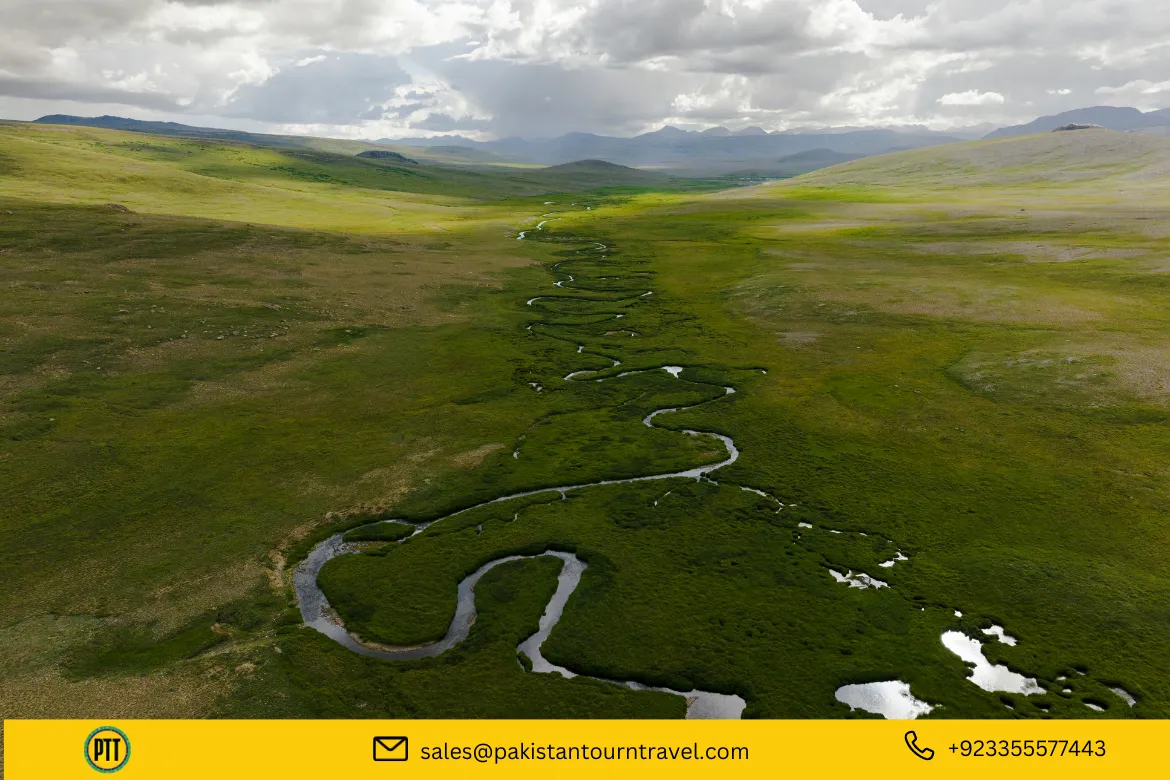
A majestic view of Deosia National Park
5. Sheosar Lake: The Jewel of Deosai Plains
Sheosar Lake is one of the most unforgettable stops inside Deosai. The name is often explained as “Blind Lake,” and the water sits in a wide, open landscape where the sky feels enormous. Sheosar Lake is a key attraction within Deosai, while other travel references place it at around 4,114–4,250 meters, depending on measurement and location description.
Why visit Sheosar Lake? On a clear day, you may see distant snow peaks reflected in the water. In summer, flowers bloom around the lake, and the air feels thin, cold, and clean.
How to reach: Most travelers visit Sheosar as part of a Deosai day trip or an overnight Skardu–Deosai–Astore route. From Skardu, expect a long, rough jeep day. Leave early, carry food, water, and warm layers.
Photography tip: Do not walk too close to soft, boggy edges. Use a wider frame that includes a lake, grassland, clouds, and mountains together. That is the Sheosar shot.
6. Shigar Fort: Heritage, Silence, and Mountain Royalty
Shigar Fort is one of the most atmospheric heritage sites near Skardu. It sits in Shigar Valley, surrounded by orchards, stone lanes, and mountain views. The restoration of Shigar Fort is part of the larger heritage conservation story of Baltistan led by the Aga Khan Cultural Service Pakistan and the Aga Khan Trust for Culture, whose work also includes Khaplu Palace.
Why visit Shigar Fort? Because it is not just a museum. It is a restored palace-fort where you can walk through history and, if your budget allows, stay overnight in a heritage hotel setting. The rooms, courtyards, carved wood, and quiet gardens create a different kind of luxury: not flashy, but deeply rooted.
Many locals say Shigar is best understood slowly. First see the fort, then walk through the village lanes. The small mosques, irrigation channels, apricot trees, and mud-stone homes tell the story that polished museum rooms cannot tell alone.
How to reach: Drive from Skardu toward Shigar. The distance is roughly 35–45 km, depending on your starting point and route. Allow 1.5–2 hours with photo stops.
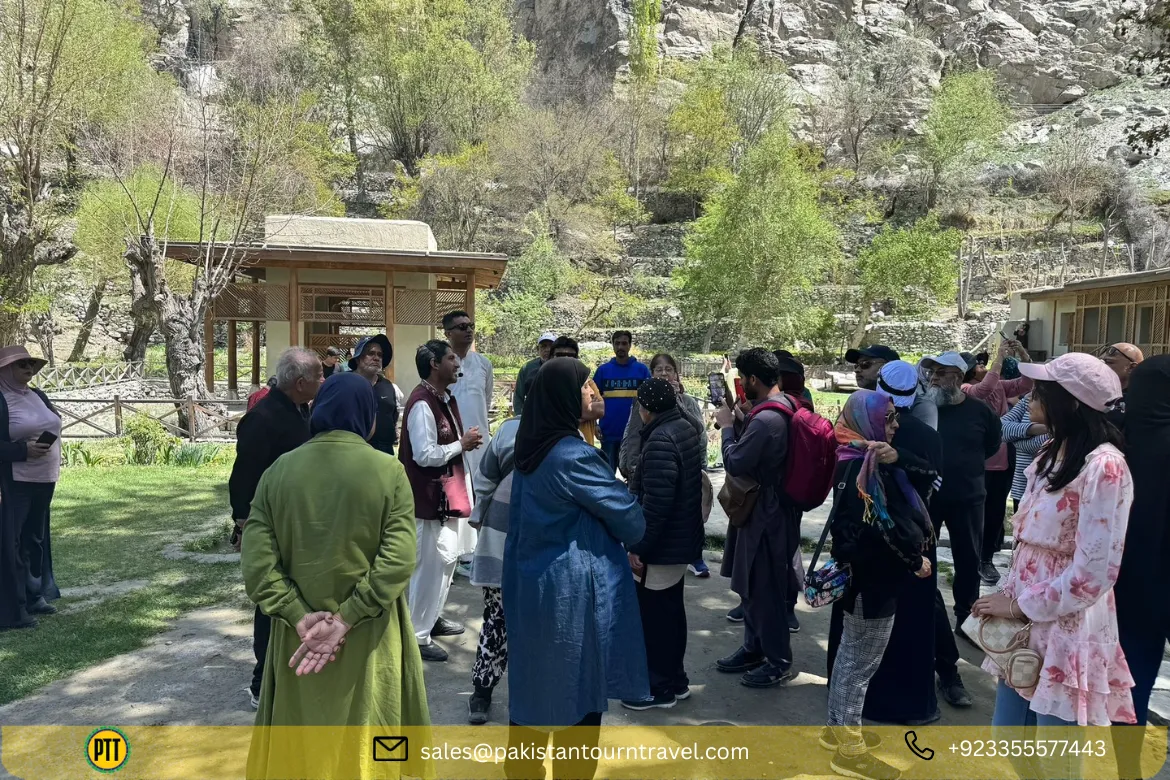
Tourists are enjoying their time at Shigar Palace, a place not to be missed.
7. Khaplu Palace: Baltistan’s Royal Masterpiece
Khaplu Palace, also known as Yabgo Khar, is one of the finest historic buildings in Baltistan. It was built in the 19th century and later restored for adaptive reuse as a museum and heritage guesthouse. It’s stone masonry, timber reinforcement, lime plaster, carved wooden balconies, screened verandahs, jali work, courtyards, and Mughal-inspired garden elements.
Why visit Khaplu Palace? Khaplu feels softer than Skardu and Shigar. The Shyok River valley opens beautifully, and the palace stands like a memory of old Baltistan. If you love architecture, Sufi heritage, carved wood, and quiet mountain towns, Khaplu is worth the long drive.
A popular story says the palace site was chosen after a large stone was rolled down a cliff, and the palace was built where the stone came to a stop. Whether legend or memory, it shows how deeply local architecture is connected to the landscape.
How to reach: Khaplu is about 100–115 km from Skardu. Travel time is usually 2.5–4 hours, depending on road conditions and stops. Make it a day trip only if you start early; otherwise, stay overnight.
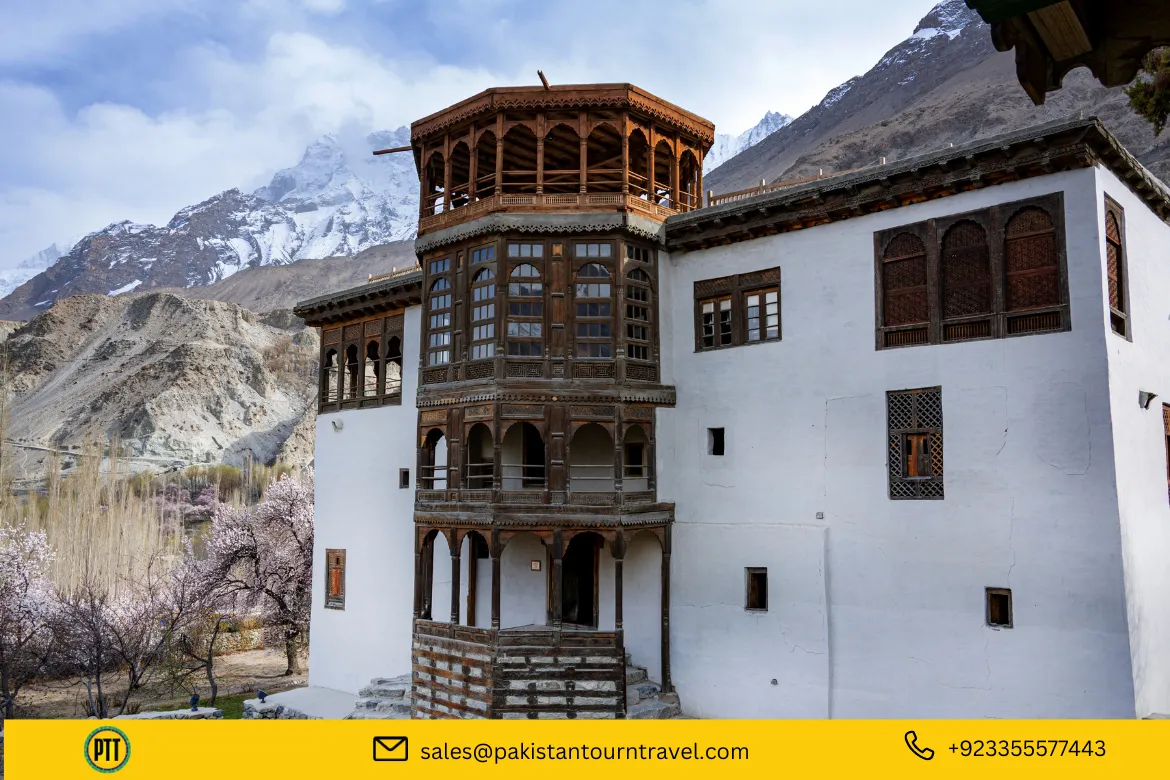
Khaplu fort is another reason why Skardu is a popular destination all year long
8. Chaqchan Mosque, Khaplu: A Sacred Wooden Treasure
If you are going to Khaplu Palace, do not miss the Chaqchan Mosque. It is one of the oldest mosques in the region and is often connected with the arrival of Islam in Baltistan. Furthermore, its construction is attributed to Syed Ali Hamdani in the late 14th century, and it is described as having ornate timber carving, with restoration by the Aga Khan Trust for Culture Pakistan.
Why visit? The mosque blends Tibetan, Kashmiri, Persian, and local Balti influences. The carved woodwork is delicate, and the atmosphere is peaceful.
Etiquette: Dress modestly, remove shoes where required, ask before photographing people, and avoid visiting during prayer time unless invited respectfully.

Chanqchan Mosque, Khaplu – a masterpiece of architecture – a famous place in Skardu
9. Manthoka Waterfall: Picnic, Trout, and Mountain Spray
Manthoka Waterfall is one of the best family-friendly day trips from Skardu. It is located in Kharmang Valley, approximately 80 km from Skardu, with a drop of about 180 feet, picnic areas, nearby streams, and trout-farming opportunities.
Why visit Manthoka Waterfall? It is refreshing, green, and dramatic. The waterfall cascades over a rocky wall, and the surrounding area is ideal for picnics, simple meals, and photography.
How to reach: Drive from Skardu toward Kharmang Valley. The journey is usually around two hours, but road conditions matter. A local driver is useful, especially if you are new to mountain roads.
Photography tip: Keep a cloth handy for your lens, since the spray can hit your camera or phone. For a softer waterfall look, visit when the light is not too harsh, such as morning or late afternoon.
10. Katpana Desert: Skardu’s Cold Desert Near the City
Katpana Desert, often called the Cold Desert, is one of the strangest and most beautiful places in the Skardu tourist destinations list. Imagine pale sand dunes with snow-covered mountains behind them. In winter, the dunes may even receive snow, creating a surreal desert-and-snow scene.
Katpana is close to Skardu city, so it is ideal for sunrise, sunset, or a quick evening stop.
How to reach: Drive from Skardu toward Katpana village/airport side. Travel time is usually 20–30 minutes.
Best experience: Go at sunrise if you can wake up early. The dunes glow softly, and there are fewer people. Sunset is busier but magical.
Local guide tip: Do not drive randomly over dunes. Use existing tracks and respect the land around the nearby village. Cold desert ecosystems may look empty, but they are fragile.
11. Sarfaranga Cold Desert: Dunes, Rally Culture, and Festivals
Sarfaranga Cold Desert lies on the way to Shigar and is one of Baltistan’s most unique landscapes. Sarfaranga is located in the Shigar District at around 7,500 feet, surrounded by mountains with the Indus River nearby. Moreover, the annual Sarfaranga Cold Desert Jeep Rally and festival activities include polo, boating, rafting, sword dances, music, and rock climbing.
Why visit Sarfaranga? It feels bigger and more open than Katpana. The dunes stretch toward the mountains, and during rally season, the whole area becomes lively with vehicles, local music, food, and cultural energy.
How to reach: Drive from Skardu toward Shigar. Depending on your exact stop, it can take 30–60 minutes.
Best time to visit: Sunset is the classic time, but morning is quieter. If you want rally energy, check the official local event calendar before planning.
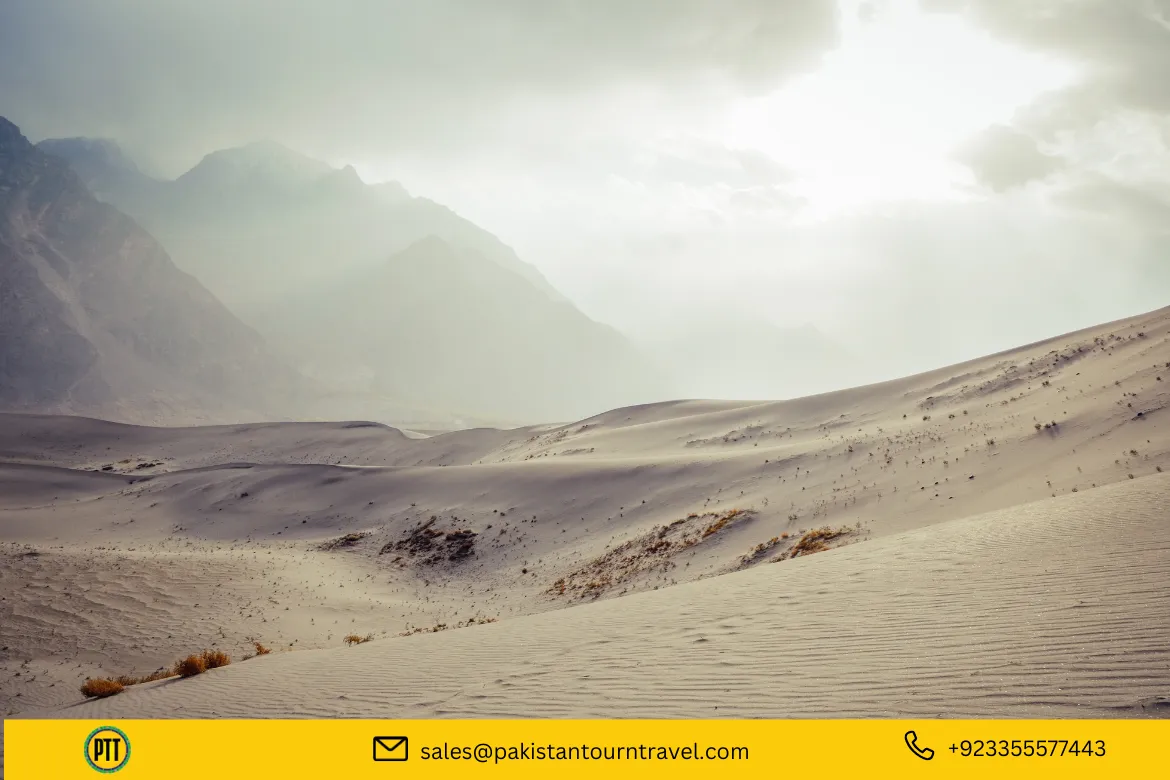
Sarfaranga Desert – enjoy a jeep safari, quad bike ride here
12. Kharpocho Fort: The King of Forts
Kharpocho Fort, also called Skardu Fort, stands above Skardu like a watchman. Its name is often translated as “King of Forts.” The fort is linked to the Maqpon rulers of Baltistan and served as a strategic lookout above the junction of the Indus and Shigar rivers.
Why visit Kharpocho Fort? For the view. From the top, Skardu city spreads below, with the Indus River, sand plains, mountains, and settlement patterns all visible at once. It helps you understand why Skardu mattered historically: whoever controlled this height could watch the valley. Locals often tell stories of queens, hidden passages, and old battles connected with Kharpocho. Even if some tales are half-history and half-folklore, they make the climb feel alive.
How to reach: Start from Skardu city and hike up. The trail can be steep and dusty, so wear proper shoes and carry water. Go early morning or late afternoon.
Minor and Hidden Gems in Skardu
13. Basho Valley: Meadows, Shepherds, and Camping
Basho Valley is one of Skardu’s most loved hidden gems. It has meadows, pine patches, streams, wooden huts, and summer grazing areas. Basho is about 40–45 km from Skardu and typically requires a 4×4 vehicle because the final track is rough. Now you can book a Basho valley tour at an amazing price and enjoy the best moments with our premium services.
Why visit Basho? It is perfect for camping, soft trekking, and escaping the busier lake circuit. In summer, shepherds move animals to grazing areas, and you may hear stories of snow leopards, changing weather, and old footpaths between valleys.
How to reach: Drive from Skardu toward the Basho Bridge area, then continue by 4×4 jeep on the mountain track. Do not attempt the upper track in a small car.
Local tip: Ask before setting up camp near grazing land. These meadows are not empty “Instagram spots”; they are part of local livelihoods.
14. Hushe Valley: Gateway to Masherbrum and Mountaineering Culture
Hushe Valley is for travelers who want to feel the mountaineering soul of Baltistan. The official tourism department describes Hushe as the last village in Ghanche District, known for its granite rocks, snow-capped peaks, and the surrounding Karakoram mountains, including Laila Peak, K6, K7, and other trekking areas.
Why visit Hushe? Hushe is a gateway to treks and climbing routes connected to Masherbrum, Gondogoro, and the wider Karakoram. Even if you are not climbing, the culture of porters, guides, expedition cooks, and mountain families is fascinating.
How to reach: From Skardu, travel through the Khaplu side and continue toward Hushe. It can take 8–9 hours or more, depending on conditions. Start early and consider overnighting.
Local guide insight: In Hushe, mountains are not just scenery. They are work, identity, risk, memory, and pride. Talk respectfully with local porters and guides; many have stories from international expeditions.
15. Tormik Valley and Organic Villages: Apricot Blossoms and Real Balti Life
If you want the softer side of Skardu, visit organic villages such as Tormik, Chunda, and Shigar, or smaller settlements around the valley. In spring, apricot and cherry blossoms turn villages pink and white. Furthermore, valleys such as Chunda become especially picturesque in spring as cherry and apricot blossoms appear against lingering snow.
Why visit organic villages? This is where you experience an authentic Baltistani lifestyle: stone homes, irrigation channels, apricot drying, barley fields, children walking to school, and elders sitting in the sun.
How to reach Tormik Valley: Tormik and other village valleys require local route advice. Some roads are paved, while inner-village routes may require jeeps or walking.
Cultural etiquette: Greet people with “Assalamu Alaikum,” ask before taking photos, and do not enter orchards without permission. If someone offers tea, accept with gratitude if your schedule allows.
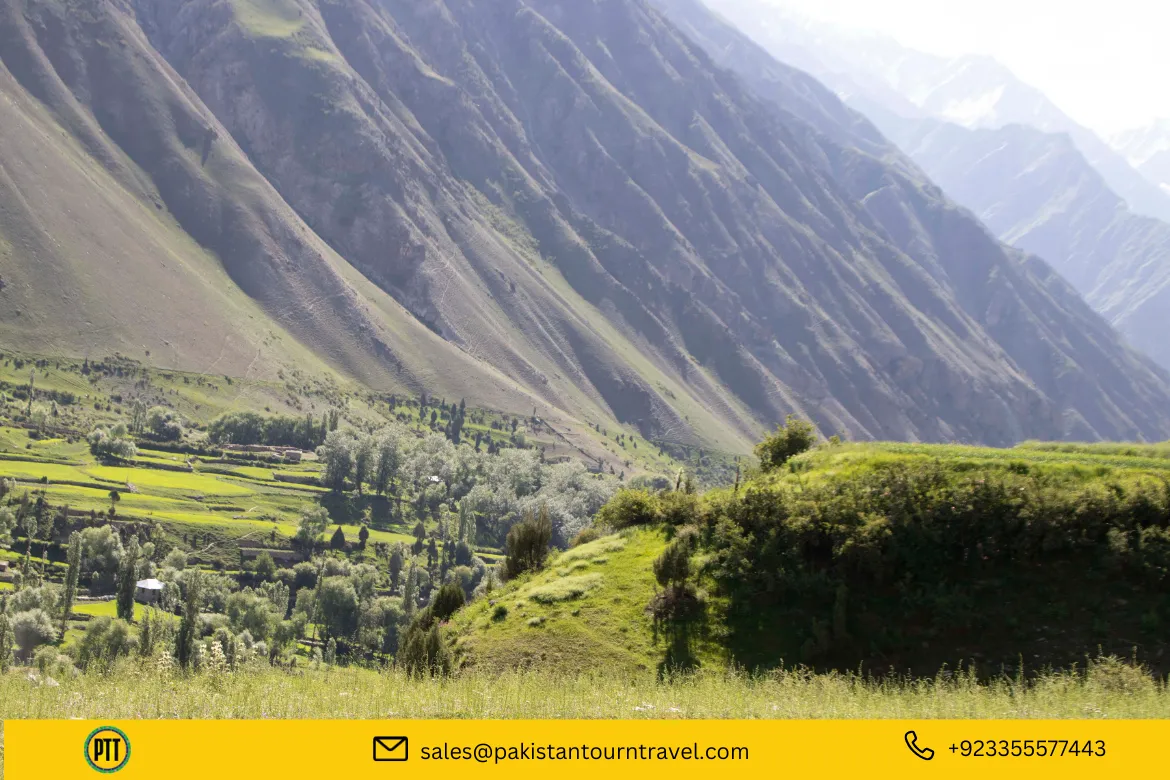
A hidden place in Skardu – Tormik Valley
16. Chunda Valley: Blossom Viewpoint Above Skardu
Chunda is not always included in classic Skardu tour plans, but it should be. It offers elevated views over Skardu, especially beautiful during blossom season and autumn. If you want to see this amazing valley, we recommend you book our Chunda Valley Tour package now, which covers the entire valley and shows you the unseen places in Skardu.
Best time to visit Chunda Valley: Late March to mid-April for blossoms, and October for autumn colors. Timing changes each year with the weather.
How to reach: Drive uphill from Skardu with a local driver. Roads can be narrow, so avoid large vehicles if possible.
17. Blind Lake / Jarba Zhou near Shigar
Blind Lake, also known locally as Jarba Zhou, is a quiet stop on the Shigar side. It is not as famous as Kachura, but that is the point. The water, reeds, and mountains create a calm scene, especially for travelers who enjoy slow photography.
How to reach: Visit it on the way to or from Shigar Fort and Sarfaranga. Ask your driver to include it in the route.
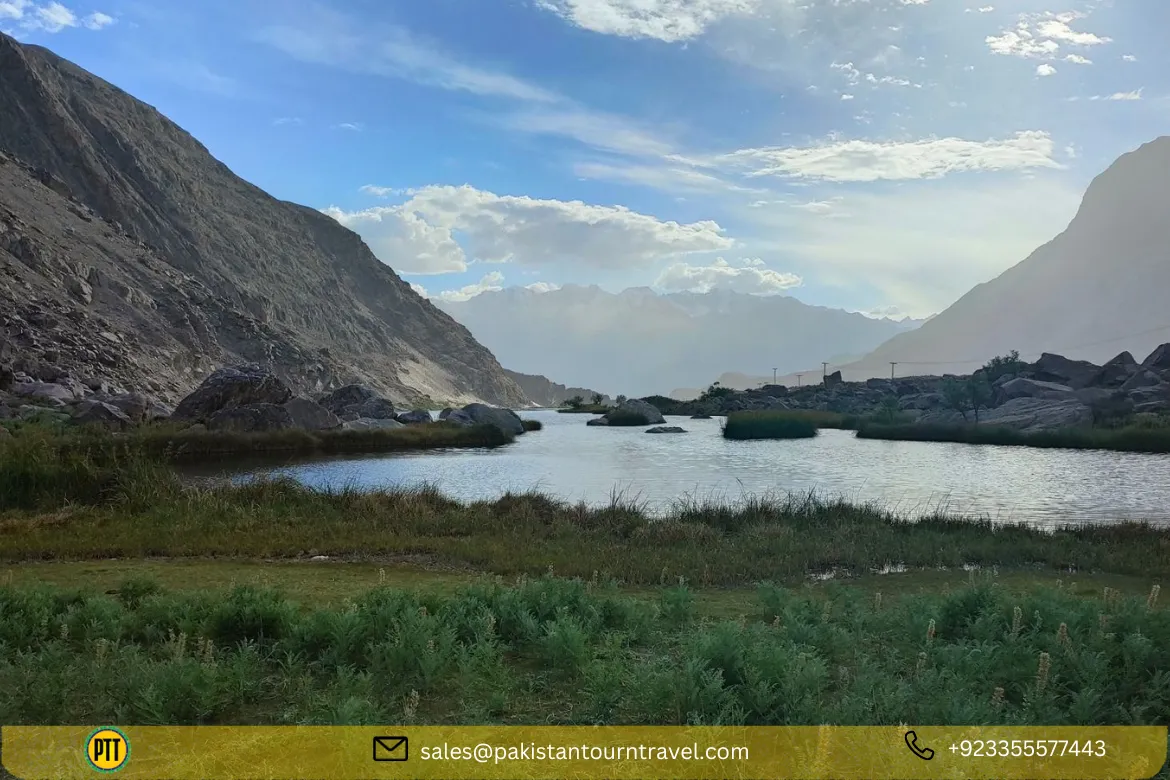
Blind Lake, an unseen place in Skardu
18. Amburiq Mosque, Shigar
Amburiq Mosque is another historic gem near Shigar. It is smaller than the Chaqchan Mosque but deeply atmospheric, with old woodwork and a village setting. It fits beautifully into a Shigar heritage day.
How to reach: Combine it with Shigar Fort. Local guides can show the walking route through village lanes.
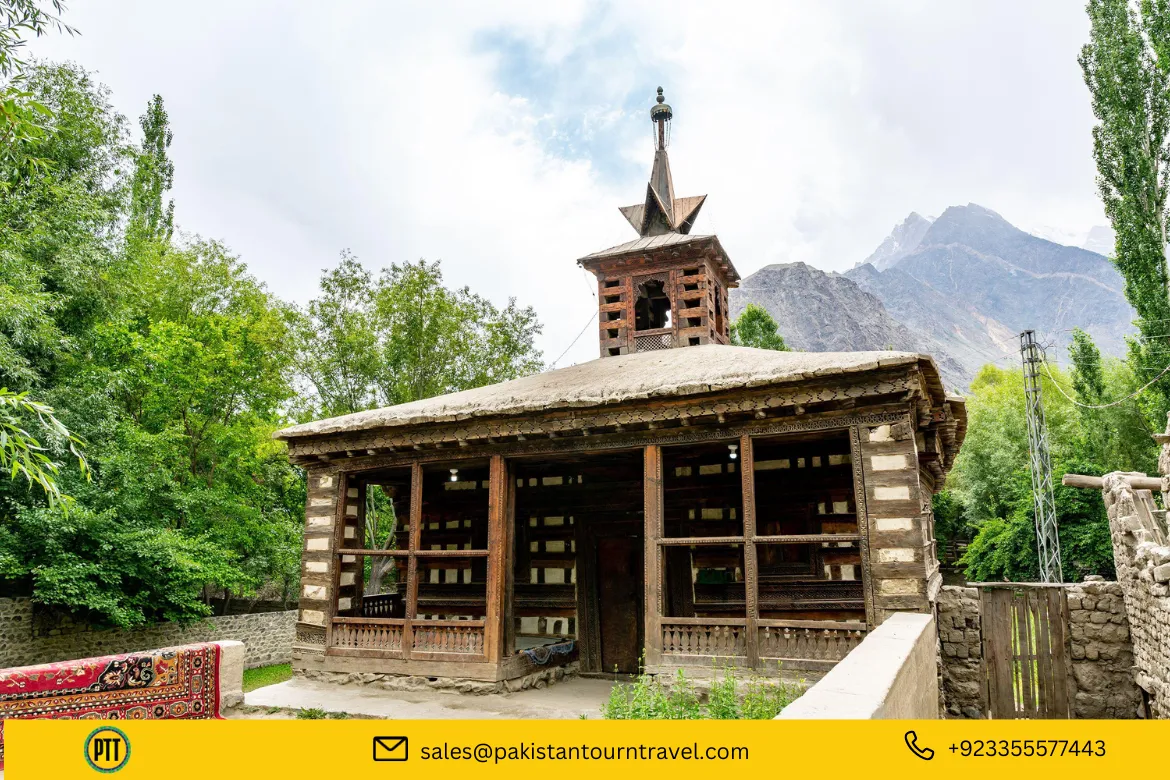
Amburiq Mosque, Skardu
19. Soq Valley and Nearby Village Walks
Soq Valley is one of those places where the road itself becomes the attraction. Green fields, mountain walls, streams, and quiet villages make it ideal for travelers who want something gentler than Deosai but less crowded than Kachura.
Best for: Slow walks, tea stops, village photography, and a peaceful half-day extension from Skardu.
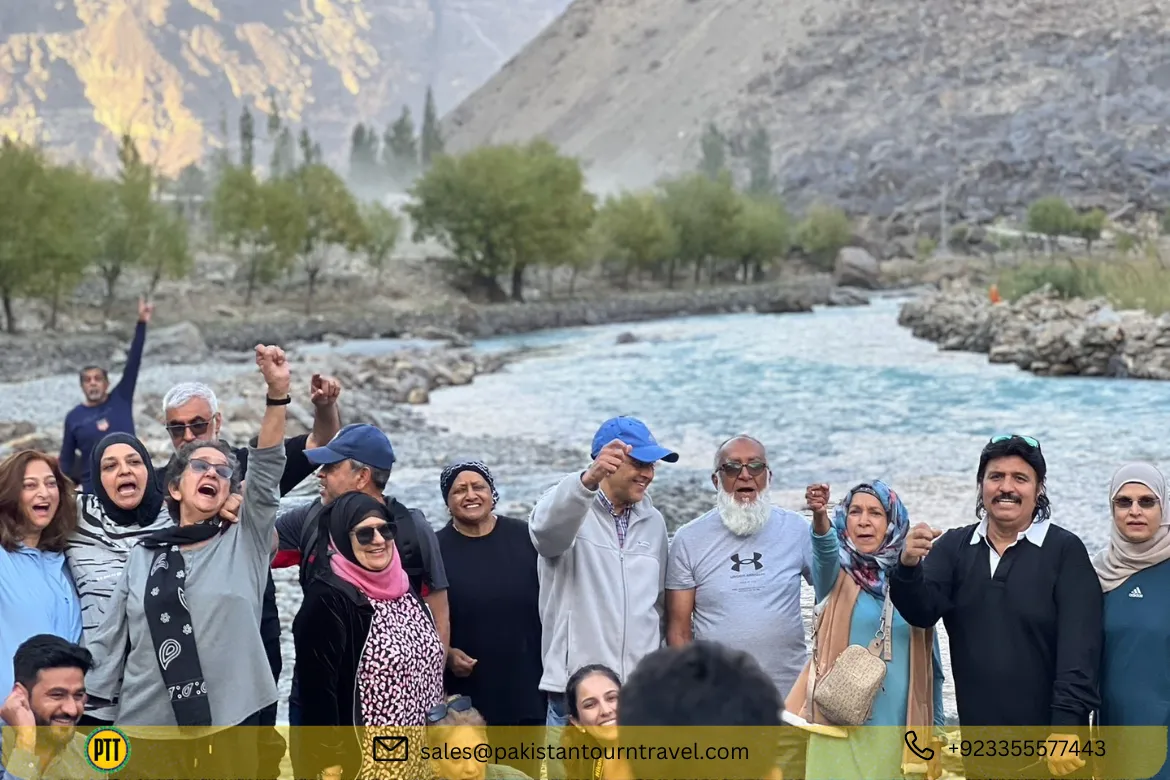
Soq valley, an unexplored valley
20. Khamosh Waterfall and Kharmang Side Trips
If you are already traveling toward Manthoka, ask your driver about other Kharmang Valley stops such as Khamosh Waterfall, small riverside villages, and viewpoint pullovers. Not every stop has developed facilities, so carry snacks, water, and warm clothing.
Food and Hospitality: What to Eat in Skardu?
A real Skardu trip is incomplete without tasting its local food. Balti cuisine is usually warming, hearty, and milder than food in many other parts of Pakistan. Popular local foods include Mamtu dumplings, Balay noodle soup, Khambir bread, Harissa, apricot dishes, butter tea, and apricot oil-based foods. Moreover, Mamtu, Khambir, Harissa, Balay, and apricot dishes are local favourites. Try:
- Mamtu: steamed dumplings, often filled with meat.
- Balay: noodle soup for cold evenings.
- Khambir: local bread, great with tea or apricot jam.
- Apricot soup or apricot products: especially in villages.
- Prapu or local noodle dishes: ask at homestays.
- Butter tea: salty, warming, and very local.
Hospitality in Baltistan is gentle and sincere. If you are invited into a home, sit respectfully, accept tea with both hands if offered, and do not waste food.
Best Time to Visit Skardu in 2026
Spring: Late March to April: Best for apricot and cherry blossoms, village walks, photography, and softer weather. Some high-altitude areas like Deosai remain closed.
Summer: June to September: Best for Deosai, Sheosar Lake, trekking, camping, Hushe, Basho, and full Skardu tour itineraries. This is peak season, so book hotels early.
Autumn: October to early November: Best for golden poplars, clear skies, photography, and fewer crowds. Nights get cold, and high passes may begin closing.
Winter: December to February: Best for snow lovers and cold desert views, but road access can be difficult. Pack seriously warm clothing.
Where to Stay in Skardu?
The hotels in Skardu have improved a lot, but standards vary. Staying options include:
- Luxury and heritage stays: Shangrila Resort, Shigar Fort Residence, Khaplu Palace-style heritage stays.
- Mid-range hotels: available in Skardu city, Kachura, Shigar, and Khaplu.
- Guest houses: good for budget travelers and local interaction.
- Camping: Basho, Deosai, and selected valleys, but only with proper gear and local guidance.
Book Skardu Tour Packages in advance for June–August and during major holidays.
Practical Travel Tips for Skardu Pakistan
Safety situation in Skardu Valley
Skardu is generally considered welcoming for tourists, but mountain travel needs caution. Weather changes quickly, roads can close, and mobile signals may disappear outside towns. Always share your route with your hotel or family.
Connectivity
Mobile data works in Skardu city better than in remote valleys. Expect weak or no signal in Deosai, Basho, Hushe, and parts of Kharmang.
What to pack for a trip to Skardu?
Bring layered clothing, sunscreen, sunglasses, lip balm, a reusable water bottle, comfortable shoes, power bank, basic medicines, cash, and a small daypack. For Deosai and high-altitude areas, pack a warm jacket even in summer.
Sustainable travel
Do not litter. Carry waste back to Skardu. Avoid loud music in villages and natural areas. Hire local drivers and guides. Buy local dried apricots, handicrafts, and meals from small businesses. Respect wildlife and maintain a safe distance in Deosai, and never feed animals.
Cultural respect
Baltistan is modest and traditional. Dress respectfully, ask before taking portraits, and be extra considerate around mosques, homes, and village paths.
Our Hot Selling 7 Day Skardu Tour Itinerary
- Day 1: Arrival in Skardu: Relax, visit Satpara Lake or Katpana Desert for sunset.
- Day 2: Kachura Lakes: Visit Shangrila Resort, Lower Kachura Lake, and Upper Kachura Lake.
- Day 3: Shigar Side: Explore Sarfaranga Cold Desert, Blind Lake, Shigar Fort, and Amburiq Mosque.
- Day 4: Deosai National Park: Full-day jeep trip to Deosai and Sheosar Lake. Start early.
- Day 5: Manthoka Waterfall: Day trip to Kharmang Valley and Manthoka Waterfall.
- Day 6: Khaplu: Visit Khaplu Palace and Chaqchan Mosque. Overnight if possible.
- Day 7: Hidden Valley Day: Choose Basho Valley, Chunda/Tormik villages, or a relaxed Skardu bazaar and food day.
How Many Days Are Enough for Skardu?
Many people make the mistake of planning very short trips. To properly enjoy Skardu, at least 5 to 7 days are recommended. A good itinerary usually includes:
- Upper and Lower Kachura,
- Shangrila Resort,
- Shigar Valley,
- Sarfaranga Cold Desert,
- Deosai Plains,
- Khaplu Valley,
- Basho Valley.
If you want a relaxed experience instead of rushing from place to place, even 8 to 10 days can feel short, because every valley deserves proper time.
Is Skardu safe for tourists?
Yes, Skardu is generally welcoming and tourist-friendly. The main risks are mountain-related: weather changes, rough roads, altitude, landslides, and limited connectivity in remote areas. Travel with local drivers, check conditions, and keep plans flexible.
What is the best time to visit Skardu?
The best overall time is June to September for Deosai, Sheosar Lake, trekking, and most road access. Visit in late March to April for blossoms, or in October for autumn colours.
How many days are enough for a Skardu tour?
The five-day Skardu Tour covers the main highlights. Seven to ten days is better if you want to experience Deosai, Khaplu, Shigar, Basho, Manthoka, and villages without rushing.
Can families visit Skardu?
Yes. Families usually enjoy Shangrila, Upper Kachura, Satpara, Katpana, Shigar, Khaplu, and Manthoka. Deosai and Basho require more careful planning due to rough roads and high altitude.
Do I need a jeep in Skardu?
For city areas, Kachura, Satpara, Shigar, and Khaplu, a normal car may work in good conditions. For Deosai, Basho, and rough valley tracks, a 4×4 jeep is strongly recommended.
What are the most beautiful places in Skardu?
The most beautiful places include Deosai National Park, Sheosar Lake, Upper Kachura Lake, Shangrila Resort, Sarfaranga Cold Desert, Shigar Fort, Khaplu Palace, Basho Valley, and Manthoka Waterfall.
Is Skardu better than Hunza?
Both are beautiful but different. Hunza is famous for its culture, forts, and easier valley travel. Skardu feels wilder, wider, and more adventurous, with high-altitude plains, cold deserts, lakes, and access to Karakoram trekking routes.
Why Travelers Keep Returning to Skardu?
The most interesting thing about Skardu is that one trip never feels enough.
- Some people return for the lakes.
- Some come back for photography.
- Some return because they miss the mountains’ peaceful silence.
And honestly, many travelers cannot even explain why they want to visit again.
- Maybe it is the cold air in the mornings.
- Maybe it is the tea beside a lake.
- Maybe it is the feeling of driving through endless mountains with no city noise around you.
Skardu has a way of staying in people’s memories long after the trip ends. If you are planning a tour of northern Pakistan in 2026, Skardu deserves more than just a quick stop. Give yourself enough time to actually experience the valleys, meet local people, explore hidden places, and enjoy the peaceful side of Gilgit Baltistan. And once you visit, you will understand why so many travelers call Skardu the most beautiful region in Pakistan.
Final Thoughts
Skardu is not a place you simply visit and leave. It stays with you. You remember the silence of Deosai, the blue of Upper Kachura, the old wood of Khaplu Palace, the spray of Manthoka Waterfall, the sunset over Sarfaranga, and the way a stranger in a village offers tea as if you were expected all along.
Furthermore, that is the magic of Skardu, Pakistan. It is adventure and culture together. It is lakes and deserts, forts and mosques, apricot blossoms and glacier winds. It is one of the richest travel experiences in Pakistan, and if you plan your Skardu tour with respect for local culture and nature, you will help protect the same beauty you came to see.
Book your Skardu packages 2026, travel slowly, support local communities, leave no waste behind, and let the mountains teach you their quiet lesson: the best journeys are not rushed.