

The mountain ranges in Pakistan bring together three of the world’s highest mountain systems—the Karakoram, the Himalayas, and the Hindu Kush. Formed by the collision of the Indian and Eurasian tectonic plates, northern Pakistan holds the highest concentration of high peaks anywhere on Earth, drawing trekkers, climbers, and travelers every year.
Out of the 14 mountains on Earth above 8,000 meters, 5 sit within Pakistan, including K2 and Nanga Parbat. Beyond these summits, hundreds of peaks cross 7,000 meters. While the mountain ranges north Pakistan holds are famous for expedition climbing, Pakistan also features mineral-rich ranges stretching through Punjab, Sindh, Khyber Pakhtunkhwa, and Balochistan.
Whether you are planning a high-altitude trek or a family holiday, this guide covers the 10 famous mountain ranges across the country, detailing their highest peaks, geographic regions, and main sights. You can also view custom Pakistan tour packages to plan your journey.
Table of Contents
When mapping out the major mountain ranges in Pakistan, the geographical spread extends from the high-altitude glaciers of Gilgit-Baltistan down to the coastal ridges of Sindh and Balochistan. Based on the documented list of mountain ranges in Pakistan, below is an at-a-glance comparison table before diving into each range.
| Mountain Range | Highest Peak | Max Elevation | Primary Region |
|---|---|---|---|
| 1. Karakoram Range | K2 (Godwin-Austen) | 8,611 m (28,251 ft) | Gilgit-Baltistan |
| 2. Himalayas Range | Nanga Parbat | 8,126 m (26,660 ft) | Gilgit-Baltistan / AJK |
| 3. Hindu Kush Range | Tirich Mir | 7,708 m (25,289 ft) | Chitral, KPK |
| 4. Hindu Raj Range | Koyo Zom | 6,872 m (22,546 ft) | KPK / Gilgit-Baltistan |
| 5. Safed Koh Range | Mount Sikaram | 4,761 m (15,620 ft) | KPK / Kurram District |
| 6. Suleiman Range | Takht-e-Suleiman | 3,487 m (11,440 ft) | Balochistan / KPK |
| 7. Kirthar Range | Zardak Peak | 2,260 m (7,415 ft) | Sindh / Balochistan |
| 8. The Salt Range | Sakaser | 1,522 m (4,993 ft) | North Punjab |
| 9. Margalla Hills | Tilla Charouni | 1,604 m (5,262 ft) | Islamabad ICT |
| 10. Toba Kakar Range | Local Summits | ~2,500 m (8,200 ft) | Northern Balochistan |

Karakoram Mountain Range
Headlining the list of major mountain ranges in Pakistan is the Karakoram Range, stretching across Gilgit-Baltistan into Xinjiang, China, and Ladakh. The Karakoram is famous for harboring the highest density of 7,000-meter and 8,000-meter peaks anywhere on Earth.
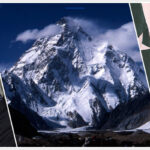
The crown jewel of the Karakoram is K2 (8,611 meters / 28,251 feet), the second-highest mountain on the planet. The range also includes three other 8,000ers: Gasherbrum I (8,080 m), Broad Peak (8,051 m), and Gasherbrum II (8,035 m). Beyond its summits, the Karakoram hosts massive non-polar glaciers, including Siachen (76 km), Baltoro (63 km), and Biafo (67 km).
For visitors, the Karakoram serves as the backdrop to Gilgit-Baltistan’s main tourism hubs. To explore these regions, book our custom Skardu tour packages or browse our Hunza Valley tour packages.

Himalayas Mountain Range
The Himalayan Mountain Range extends 2,400 km across Asia. In Pakistan, the Western Himalayas run through Gilgit-Baltistan, Azad Jammu & Kashmir, and Kaghan Valley, forming dramatic valleys and alpine meadows.
The highest point of the Western Himalayas in Pakistan is Nanga Parbat (8,126 meters / 26,660 feet), the ninth-highest peak in the world. Known for its vertical Rupal Face—which drops over 4,600 meters from the summit—Nanga Parbat overlooks popular travel destinations such as Fairy Meadows, Rama Meadows in Astore, and the Deosai National Park plains.

Hindu Kush Mountain Range
Extending southwest from the Pamir Knot through northern Chitral and Afghanistan, the Hindu Kush range forms a historical barrier between the Indus Basin and Central Asia. It contains rugged terrain, deep gorges, and isolated mountain valleys.
The highest peak in the Hindu Kush range is Tirich Mir (7,708 meters / 25,289 feet), dominant over the Chitral District. The range encompasses cultural valleys like Kalash (Bumburet, Rumbur, Birir) and remote wilderness routes like Broghil Pass. Trekkers can view organized itineraries through our trekking tour packages.

Hindu Raj Mountain Range
Running parallel between the main Hindu Kush system and the Karakoram, the Hindu Raj Range stretches through northern Khyber Pakhtunkhwa and parts of Gilgit-Baltistan. Because none of its peaks cross the 7,000-meter mark, it sees less commercial mountaineering, retaining an untouched environment.
The highest peak in the Hindu Raj Range is Koyo Zom (6,872 meters). Other notable summits include Buni Zom (6,542 m) and Ghamubar Zom. The range feeds major rivers running through the Swat, Dir, and Ghizer valleys.

Safed Koh Mountain Range
Safed Koh (meaning “White Mountains” in Persian due to snow-capped winter summits) lies along the border of eastern Afghanistan and the Kurram District of KPK. Located south of the Kabul River, it forms a natural crest near the Khyber Pass.
The highest elevation in Safed Koh is Mount Sikaram, reaching 4,761 meters (15,620 feet). The range intercepts weather systems, creating pine forest covers that support agriculture in Parachinar and surrounding valley floors.

Suleiman Mountains Range
Forming the eastern boundary of the Iranian Plateau, the Suleiman Mountain Range extends south from Khyber Pakhtunkhwa into northern Balochistan. It forms a geographical barrier between the Balochistan plateau and the Indus River plains of Punjab.
The most famous peak in this range is Takht-e-Suleiman (3,487 meters / 11,440 feet). Nearby in Ziarat District, Khilafat Hill (3,475 meters) stands amid one of the world’s oldest surviving juniper forests, estimated to be thousands of years old.

Kirthar Mountain Range
Spanning over 300 kilometers along the border between Sindh and Balochistan, the Kirthar Range consists of dry, parallel rock ridges running south toward the Arabian Sea coast.
The highest elevation in the Kirthar range is Zardak Peak (2,260 meters). A key tourism point in this range is Gorakh Hill Station (1,734 meters / 5,688 feet), popular among travelers from Karachi and Hyderabad for weekend camping and cooler summer temperatures.

The Salt Range
Located in northern Punjab between the Jhelum and Indus Rivers, the Salt Range contains rich geological and mineral formations. The hills are famous for vast rock salt deposits created millions of years ago by an evaporating inland sea.
The highest point in the Salt Range is Sakaser Peak (1,522 meters / 4,993 feet). Key tourist locations across the range include the Khewra Salt Mine (the second largest in the world), Soon Valley lakes (Uchali, Sakesar), and the historic Katas Raj Temples.

Margalla Hills
Forming the northern backdrop of Islamabad, the Margalla Hills represent the foothills of the Lesser Himalayas. Spanning over 12,600 hectares, this hill range connects eastward with the Murree and Galyat hills.
The highest peak in the Margallas is Tilla Charouni (1,604 meters / 5,262 feet). Preserved under Margalla Hills National Park, the area offers popular hiking routes (Trails 1 through 6), wildlife sanctuaries, and scenic spots like Daman-e-Koh and Pir Sohawa.

Toba Kakar Range
Situated in northern Balochistan, the Toba Kakar Range extends northeast from Quetta toward the border towns of Chaman and Zhob. It forms a high-altitude arid boundary along the western region of the country.
With average elevations over 2,100 meters, this rugged range plays a major role in regional trade corridors, local climate patterns, and mineral extraction across western Pakistan.
From seeing K2 in the Karakoram to exploring Fairy Meadows in the Himalayas or hiking in the Margalla Hills, exploring the major mountain ranges in Pakistan offers an unforgettable travel adventure.
At Pakistan Tour and Travel, we organize guided tours, family vacations, and custom trekking trips across Northern Pakistan. Contact our team today to customize your itinerary.

Saba Ghani is Senior Content Editor at Pakistan Tour and Travel. With expertise in travel writing, she creates inspiring content that connects with audiences. Reach her at saba@pakistantourntravel.com or Twitter
Comments are closed.








12 Years of Tourism Services
Government of Pakistan, DTS License ID-2650







i dont agree she be cuz looks like a tiktoker
HI Saba,
Nice information about mountain ranges.
Thanks
Nice info
Does Suleiman Mountain ranges belong to Hazrat Suleiman?
Yup indeed. Hazrat Suleiman uses these places as a throne to communicate with Jinn.