Table of Contents
Let me tell you something most people outside this country still don’t know: Pakistan has five of the fourteen highest mountain peaks on Earth. Not two. Not three. Five. K2 alone has a nickname that tells you everything: “Savage Mountain,” because it’s brutal, beautiful, and unforgettable, all at once. And yet, when people around the world picture a dream trip, Pakistan rarely makes the list. That’s not because the country doesn’t deserve it. It’s because, for decades, we’ve made it genuinely hard to get there. Our northern pakistan packages are second to none while trips to southern Pakistan are awe-inspiring.
That’s starting to change. And it’s changing in a very unglamorous, very practical way: through better flights.
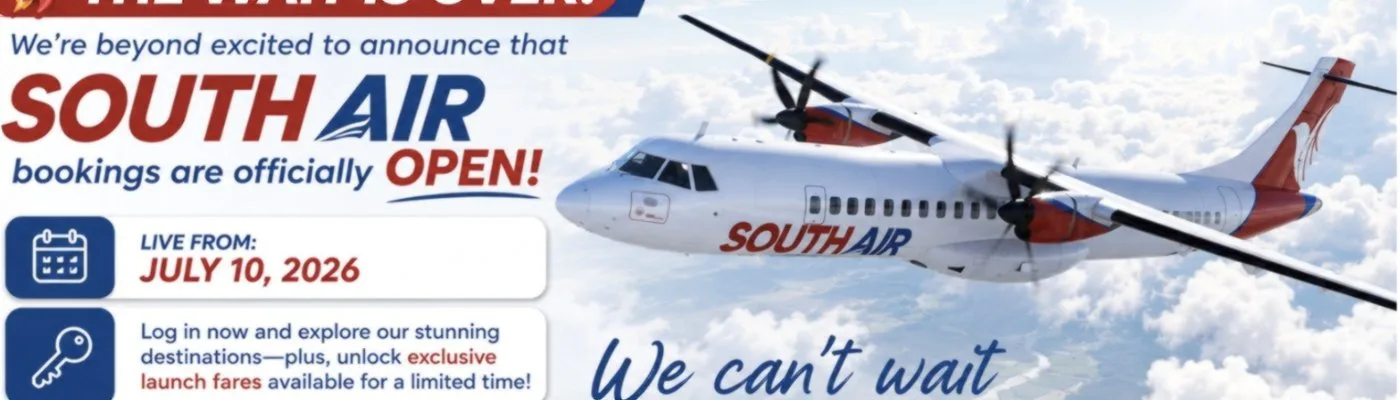
On July 16, 2026, a new domestic airline called South Air is taking off on its very first scheduled route: Karachi to Islamabad, with a stop in Bahawalpur along the way. One-way tickets are reportedly starting around Rs. 14,000, the aircraft is an ATR 72, and the whole journey takes about four hours and ten minutes. Economy Premium seats sold out before the airline even took its first flight. That’s not a footnote. That’s a signal.
Because here’s the truth about tourism that nobody puts on a postcard: it doesn’t run on scenery alone. It runs on logistics. A waterfall in Swat or a fort in Bahawalpur is only as valuable to a traveler as the ease of reaching it. You can have the most breathtaking valley in the world, but if getting there means three connecting buses, a missed one, and a prayer, most people simply won’t come. South Air’s arrival, linking a major hub like Karachi with a historically underserved city like Bahawalpur, is exactly the kind of unglamorous infrastructure that turns “someday I’ll visit” into “I booked it for next weekend.”
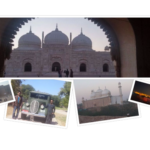
I want to be honest with you: Pakistan has an image problem, and it’s largely inherited, not earned. Ask the average person abroad what comes to mind when they hear “Pakistan,” and you’ll get headlines from a decade ago, not the reality of today. What they won’t picture is Hunza Valley in October, when the entire landscape turns into shades of gold and rust that look almost painted on. They won’t picture the turquoise stillness of Attabad Lake, or the cedar forests of Ayubia, or the desert forts of Cholistan glowing amber at sunset. They won’t picture Lahore’s Walled City at night, food stalls sizzling under strings of lights, centuries of Mughal architecture standing quietly above the noise.
This isn’t exaggeration for the sake of a blog post. This is a country that international travel publications have, in recent years, started quietly naming among the world’s most underrated destinations. Adventure travelers who’ve made it to the Karakoram Highway, often called one of the most spectacular road journeys on the planet, come back changed. They talk about it the way people talk about a religious experience. And then they ask the obvious question: why isn’t everyone talking about this?
The answer, uncomfortably, has often come down to access. Getting a visa used to be its own expedition. Domestic travel between tourist hotspots has historically meant long, exhausting road trips over difficult terrain, or expensive, limited flight options concentrated around a handful of major cities. If you wanted to see the north, you built your entire trip around Islamabad. If Bahawalpur, Multan, or dozens of other culturally rich but commercially overlooked cities were on your list, you often had to fight for it.
Here’s a shift in thinking I’d encourage: stop thinking about tourism as beautiful places, and start thinking about it as beautiful places you can actually reach without losing two days of your trip to transit.
Every additional domestic route, every new airline, every price point that opens flying up to a broader slice of the population: these aren’t just business stories. They’re tourism infrastructure in the truest sense. When South Air says its goal is to “improve domestic connectivity by linking major cities with underserved destinations,” what they’re really saying is: we’re going to make it possible for a student in Karachi to spend a weekend exploring Bahawalpur’s Noor Mahal and Derawar Fort without needing a ten-hour bus ride. We’re going to make it possible for a family in Islamabad to fly south for a few days rather than treating the south as a place you only visit for work. Do check our reviews on trip advisor as well.
This matters more than it might seem. Domestic tourism is often the quiet engine behind international tourism. Countries that build strong internal travel habits, where their own citizens explore their own cities and landscapes affordably, end up with the hospitality infrastructure, the word-of-mouth reputation, and the local pride that eventually pulls in international visitors too. You can’t market a destination convincingly to the world if your own people haven’t fallen in love with it first.
And Pakistanis are falling in love with their own country. Social media over the last few years has been full of it: reels of Fairy Meadows at dawn, of Naran’s Saif-ul-Malook Lake reflecting the mountains like glass, of Skardu’s lunar-looking valleys that genuinely don’t look real. Young Pakistani travelers, armed with nothing more than a camera phone and curiosity, have done more for the country’s tourism image in five years than a decade of formal campaigns managed to do. What they’ve been missing isn’t enthusiasm. It’s affordable, reliable ways to actually get where the beauty is.
Let’s talk numbers for a second, because passion alone doesn’t build an industry. Infrastructure and economics do. Tourism, done right, is one of the most efficient job-creation engines a country can build. It doesn’t just employ pilots and hotel managers. It employs the person selling walnuts on the roadside in Chitral, the guide leading treks in Fairy Meadows, the artisan selling truck art replicas in Lahore, the boatman on Attabad Lake, the family running a homestay in Hunza because their spare rooms suddenly became an income stream. Tourism spreads money into places that few other industries reach, because it goes wherever the traveler goes, not just to the capital, not just to the ports, but to the villages, valleys, and small cities in between.
Pakistan’s neighbors have understood this for years. Nepal, with a fraction of Pakistan’s mountain range and geographic diversity, has built an entire national identity and economy around trekking tourism. What Nepal has that Pakistan has historically lacked isn’t better mountains. Pakistan’s are, frankly, more dramatic in variety, from K2’s brutal verticality to Hunza’s cultivated terraces to Cholistan’s rolling desert dunes. What Nepal built better was access: flights, permits, guides, and a tourism-friendly reputation that made the whole process feel achievable rather than intimidating.
That’s the gap Pakistan is finally starting to close. Visa policies have loosened considerably in recent years. Domestic airlines are multiplying and competing on price, which is exactly what happened with South Air’s Economy Premium seats selling out before the plane even flew its first route: real demand, met with real supply, at a price point people can actually afford. Roads into the north have improved. Hospitality options, from boutique hotels to family-run guesthouses, have grown in both number and quality.
If you’re a traveler reading this, wondering whether Pakistan belongs on your list, it does, and the timing has rarely been better. You’re arriving at a moment when access is genuinely improving, when prices are still refreshingly reasonable compared to more “discovered” destinations, and when the crowds that eventually follow any newly popular place haven’t arrived yet. That window doesn’t stay open forever.
If you’re Pakistani and haven’t yet made the trip to your own north, your own deserts, your own forts and lakes and valleys, consider this your nudge. New routes like South Air’s Karachi to Islamabad to Bahawalpur line aren’t just convenient. They’re an invitation. An affordable one, at that.
Tourism isn’t built by a single flight route or a single airline. It’s built by a thousand small decisions that make travel easier, cheaper, and more human: a new route here, a simplified visa process there, a family deciding to turn their guest room into a homestay. Pakistan has spent years accumulating the scenery. What it’s finally starting to accumulate now is the access to match it.
And when a country makes it easier for its own people to fall in love with its own land, the rest of the world tends to notice not long after.

Saba Ghani is Senior Content Editor at Pakistan Tour and Travel. With expertise in travel writing, she creates inspiring content that connects with audiences. Reach her at saba@pakistantourntravel.com or Twitter





12 Years of Tourism Services
Government of Pakistan, DTS License ID-2650