Pakistan is consistently ranking as one of the world’s premier destinations for trekking and adventure tourism. Featuring stunning alpine views, rugged high-altitude trails and a deeply rooted cultural heritage, the country offers an array of incredible wilderness expeditions. For global thrill-seekers searching for premium Pakistan adventure travel packages, the rugged northern regions offer an escape unlike anywhere else on earth.
From gentle mountain walks to extreme high-altitude expeditions, the country serves as a sanctuary for outdoor enthusiasts looking to experience pure, untouched wilderness. A massive variety of routes cater to diverse fitness levels, durations and travel budgets, as highlighted in a recent Eurasia Review report on treks and hikes in Pakistan, especially when organizing your trip through professional guided trekking tours in Pakistan. Before booking any tour, understanding the best trekking season in Pakistan is essential to ensure trails are free of snow. Discover why Pakistan is a trekking heaven for international hikers, and book your upcoming expedition today via our top-rated trekking tour packages in Pakistan.
Table of Contents
Pakistan serves as the meeting point for three of the world’s greatest mountain ranges: the mighty Himalayas, the rugged Karakoram and the serene Hindu Kush. Hosting iconic giants like K2, Nanga Parbat and Rakaposhi, these massive peaks offer a dramatic, beautiful backdrop that makes every mountain expedition a truly unforgettable milestone.
From legendary mountain passes to scenic alpine valleys, the trail networks here accommodate everyone from casual backpackers to professional mountaineers. Globally acclaimed paths like the Concordia-K2 Base Camp route, the legendary Fairy Meadows track, and the intense Biafo-Hispar Glacier Traverse allow travelers to completely immerse themselves in local lifestyles. These iconic trails stand out as the absolute best hiking trails in Gilgit-Baltistan.
The geographical diversity across Pakistan presents adventurers with an incredible variety of natural landscapes. Trekkers can transition from the dense pine forests and fertile meadows of the north—perfectly showcased across our premium Swat tour packages and family-friendly Naran Kaghan tours—to the stark, ancient rock formations of the Balochistan plateau and the sweeping expanses of the Sindh deserts.
An adventure holiday in Pakistan extends far beyond the physical trails; it is a chance to experience living history first-hand. Along the routes, you will connect with diverse, resilient ethnic groups—including the Balti, Kalash, and Wakhi populations—each maintaining distinct dialects, architecture, clothing styles, and ancestral customs that enrich your travel story.
Trekking Vs. Hiking? What’s the main difference? Find out in our comprehensive comparison of top hiking trails in Pakistan.
The people of Pakistan are globally celebrated for their heartfelt generosity and genuine warmth. While navigating remote mountain pathways, you will frequently meet welcoming locals eager to share their traditional stories, offer hot chai, or invite you into their homes, adding immense human connection to your mountain holiday.
Unlike over-commercialized paths in neighboring regions, Pakistan’s high-altitude routes remain beautifully rugged, quiet, and unspoiled. Hikers can experience profound tranquility and beautiful isolation without dealing with crowded trails, ensuring a raw, intimate relationship with nature.
Compared to Western or alternative Asian ranges, Pakistan delivers an exceptionally affordable adventure travel experience. Local logistical expenses, comfortable accommodations, traditional meals and private transport setups are highly budget-friendly. If you are ready to plan, you can contact our team for a transparent breakdown of your total K2 base camp trek cost based on group size or browse our comprehensive Pakistan adventure travel packages to find an itinerary that fits your specific budget while staying safe and comfortable.
From the towering granite spires of the Karakoram to the hidden alpine valleys of the Himalayas, Pakistan houses the world’s ultimate mountain playgrounds. Whether you are planning a multi-week glacial expedition or a scenic weekend ridge walk, use our interactive directory below to instantly skip to deep-dive logistics, route difficulty levels and insider how-to-reach guides.
| Trekking Destination | Region / Location | Difficulty Level | Best Season | Maximum Altitude |
|---|---|---|---|---|
| Barah Broq Trek | Ghanche District, Skardu | Moderate to Hard | June – October | 5,300m |
| Patundas Ridge Walk | Batura Glacier, Upper Hunza | Demanding | June – September | 4,575m |
| Deosai National Park Plain | High-Altitude Alpine Plateau | Moderate | June – September | 4,114m |
| Concordia & K2 Base Camp | Baltoro Glacier, Skardu | Strenuous (Expert) | Mid-June – September | 5,135m |
| Gondogoro La Pass | Karakoram Range, Hushe | Hard (Technical) | Late June – August | 5,940m |
| Shimshal Pass | Upper Hunza, Gojal | Hard (Rugged) | Late June – September | 4,735m |
| Passu Glacier & Cones | Karakoram Highway, Hunza | Moderate (Day Hike) | May – October | 3,500m |
| Harmosh Valley & Kutwal Lake | Rakaposhi-Haramosh Massif | Moderate to Hard | June – September | 3,300m |
| Fairy Meadows & Nanga Parbat | Diamer District, Himalayas | Moderate (Beginner Friendly) | April – October | 3,967m |
| Rakaposhi Base Camp (Taghaphari) | Nagar Valley, Karakoram | Moderate (2-3 Days) | June – October | 4,150m |
| Tirich Mir Base Camp | Chitral, Hindu Kush Range | Strenuous / Remote | June – September | 4,724m |
| Snow Lake (Biafo-Hispar) | Biafo Glacier to Nagar | Extreme (Expedition) | June – September | 5,151m |
| Baskochi Attabad Viewpoint | Attabad Lake, Upper Hunza | Short (Steep Hike) | June – September | 3,800m |
| Ratti Gali Lake | Neelum Valley, Azad Kashmir | Moderate (Scenic) | May – October | 3,700m |
| Rush Lake Trek | Hopar Valley, Nagar (GB) | Demanding | Mid-June – August | 4,694m |
| Karomber Lake Trek | Ishkoman, Ghizer / Broghil | Strenuous / Remote | July – September | 4,300m |
| Dudipatsar Lake Trek | Kaghan Valley, KPK | Moderate | Late June – September | 3,800m |
| Jahaz Banda & Katora Lake | Upper Dir District, KPK | Easy to Moderate | June – September | 3,550m |
The Barah Broq trek is one of Baltistan’s best-kept secrets, offering an adventurous alternative to longer glacial expeditions. This spectacular trail guides outdoor enthusiasts through vibrant summer pastures, rocky ridges, and past crystal-clear alpine streams up to the famous Moses Peak ridge. The true magic of this trek happens at the summit ridge, where you are rewarded with a dramatic, face-to-face panoramic view of the majestic Karakoram giants, including K2, Broad Peak, and Gasherbrum IV. The prime seasonal window to experience this high-altitude trail runs from June to October when weather conditions are stable. To eliminate any logistical stress, you can easily combine this route with our fully managed Skardu tour packages.
Fly or drive from Islamabad to Skardu town. From Skardu, take a scenic 3-hour drive east into the Ghanche District to reach Barah Village. The foot ascent kicks off directly from the edge of the local settlement, making it highly accessible for trekking crews.
The Patundas trek is a demanding yet highly rewarding alpine ridge walk situated directly between two of Upper Hunza’s most massive ice fields—the majestic Passu Glacier and the roaring Batura Glacier. This trek takes you high above the valleys onto an expansive meadow plateau where Wakhi herders traditionally graze their livestock during the summer months. Standing on the Patundas ridge grants you an incredible, uninterrupted 360-degree viewpoint capturing massive, jagged peaks like Shispare, Passu Sar, Ultar Sar, and Rakaposhi. The ideal seasonal window for this pristine ridge walk runs from June to September when the trails are entirely free of heavy winter snow blocks.
Travel north from Gilgit along the well-paved Karakoram Highway to the villages of Ghulkin or Passu in Upper Hunza (~3 to 4 hours drive). From there, secure a short local vehicle link to the primary trailhead located near the emerald waters of Borith Lake.
The Deosai National Park trek explores the endless rolling wilderness of the legendary ‘Land of the Giants,’ which stands proudly as one of the highest alpine plateaus on earth at an average altitude of 4,114 meters. This massive, protected ecosystem serves as a vital sanctuary for rare and endangered wildlife, including the Himalayan brown bear, golden marmots, and elusive snow leopards. Walking across the open plains brings you to the edge of Sheosar Lake, a breathtaking, mirror-like alpine lake that perfectly reflects the distant Himalayan peaks. To witness this vast plateau completely covered in a dense carpet of colorful wild alpine flowers, the absolute best time to plan your trek is from June to September.
Arrive in Skardu by domestic flight or via the Karakoram Highway. From Skardu, hire a heavy-duty local 4×4 jeep to ascend via the steep, winding Sadpara Road directly onto the high-altitude plateau, which takes roughly 1.5 to 2 hours of driving time.
The Concordia and K2 Base Camp expedition stands as the ultimate destination for global wilderness trekking. Your route follows the massive Baltoro and Godwin-Austen glaciers up to Concordia—the legendary junction of ice fields frequently referred to as the “Throne Room of the Mountain Gods.” It remains the absolute definitive selection for anyone seeking a premium K2 base camp trek package choice.
When you start looking into the total K2 base camp trek cost, the first thing you need to evaluate is the actual length of the itinerary. A safe, well-planned expedition into the Karakoram shouldn’t take less than 20 to 22 days. This isn’t a trip where you want to cut corners to save a few days; your body absolutely needs that time to adjust to the thin air as you move up the Baltoro Glacier. Taking a full three weeks ensures you actually stay healthy enough to enjoy standing at Concordia, surrounded by four of the world’s fourteen 8,000-meter mountains: K2, Broad Peak, Gasherbrum I, and Gasherbrum II.
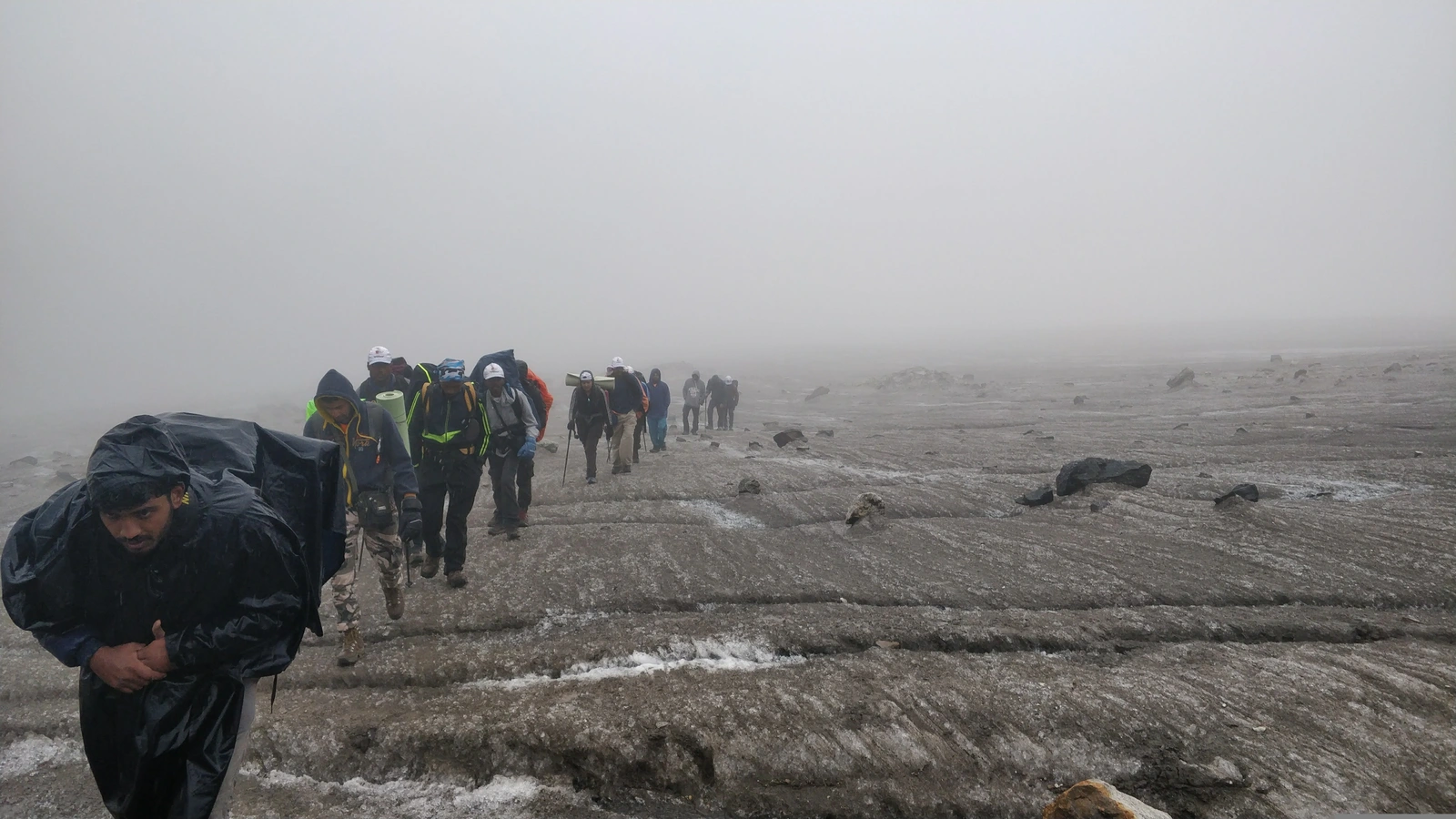
The full itinerary length for a safe K2 Base Camp trip generally spans 20 to 22 days, which incorporates vital domestic travel times from Islamabad to Skardu alongside critical mountain acclimatization days. Experienced hikers seeking a faster pace can opt for condensed 13-to-15-day variants focusing purely on the trail. Conversely, many adventure seekers extend their expedition to cross the technical Gondogoro La Pass, which adds an extra 3 to 5 days of challenging, rope-assisted glacial climbing over a 5,940m saddle.
The optimal seasonal window for the K2 Concordia trek runs during the stable summer months from mid-June through early September. During this period, daytime temperatures are manageable and mountain visibility is at its peak, though hikers must still prepare for sub-zero nights and sudden high-altitude snowstorms. Check out our fully customized guided trekking choices for pricing and group departures.
Take a domestic flight from Islamabad to Skardu (or travel the 20-to-24-hour road route via the Karakoram Highway and Jaglot-Skardu Road). From Skardu, hire a heavy-duty 4×4 jeep for an intensive 6-to-8-hour drive through the Shigar Valley to Askole Village, where the walking journey officially begins.
The Gondogoro La circuit is a challenging high-altitude mountain pass designed for physically fit adventurers. Ascending to a breathtaking 5,940 meters, this glaciated mountain pass links the majestic Baltoro glacial basin with the pristine, green oasis of the Hushe Valley, offering an unmatched vantage point overlooking the Karakoram giants.
The ideal timeframe to tackle this crossing is from late June to late August, when seasonal snow melts sufficiently to expose safer route lines. Due to steep snow walls, crevasses, and active rock fall zones, this trail requires great physical endurance, proper crampon/harness gear, and experienced mountain guides. To ensure seamless security, elite high-altitude porters, and all necessary government permits, book our signature K2 base camp and Gondogoro La tour.
The standard loop takes roughly 14 to 16 days of intensive wilderness camping. For hikers looking to expand their journey, the route can easily be lengthened to explore the nearby alpine base camps of Masherbrum (K1) or the sheer granite towers of K7 near Hushe village.
This high-altitude circuit follows the same initial access route as the K2 Base Camp trek via Skardu and a 4×4 jeep transfer to Askole Village. If completing the classic loop over the pass, you will exit through Hushe Village, from where a 5-to-6-hour jeep ride brings you back down to Skardu.
The Shimshal Pass trek is a legendary high-altitude journey that ventures into the remote heart of the Pamir pastures in Upper Hunza. Known globally as the valley of mountaineers, this rugged route guides adventurers through steep rocky gorges up to an expansive alpine plateau sitting at 4,735 meters. The ideal time to experience this dramatic wilderness trek is from late June to early September when the alpine meadows are vibrant and accessible. To plan your expedition seamlessly, discover our fully managed Shimshal Pass trek tour package.
The trail unfolds across demanding terrain, opening up into a vast pasture where local Pamiri herders graze their yaks, preserving centuries-old nomadic traditions. The crown jewels of the pass are the pristine, twin Shimshal Lakes, which perfectly mirror the towering peaks of the Karakoram range. It serves as an incredible off-the-beaten-path route for trekkers wishing to escape commercial crowds, with many choosing to tackle the nearby trekking peak of Minglik Sar (6,050m).
Travel north from Gilgit along the Karakoram Highway to Passu Village. From there, hire an experienced local 4×4 jeep to navigate the dramatic, narrow road carved directly into the cliff walls of the Shimshal River gorge until you reach Shimshal Village, the official starting point for the foot journey.
Trekking alongside the Passu Glacier is one of the most visually rewarding highlights of exploring Upper Hunza. The route provides an intimate look at deep glacial crevasses and ice seracs, all framed beautifully by the iconic, razor-sharp spires of the Passu Cones (Tupopdan Peaks).
This region offers versatile hiking configurations based on your timeframe and skill level. Casual tourists can enjoy a satisfying 5-to-6-hour day-hike starting straight from Passu Village up to the primary lateral moraine. More ambitious backpackers can arrange professional glacier guides to safely navigate across the ice toward Borith Lake, the white Batura Glacier, or the remote summer pastures of Yunz Valley. Enhance your northern itinerary by selecting one of our experiential Hunza Valley tour packages.
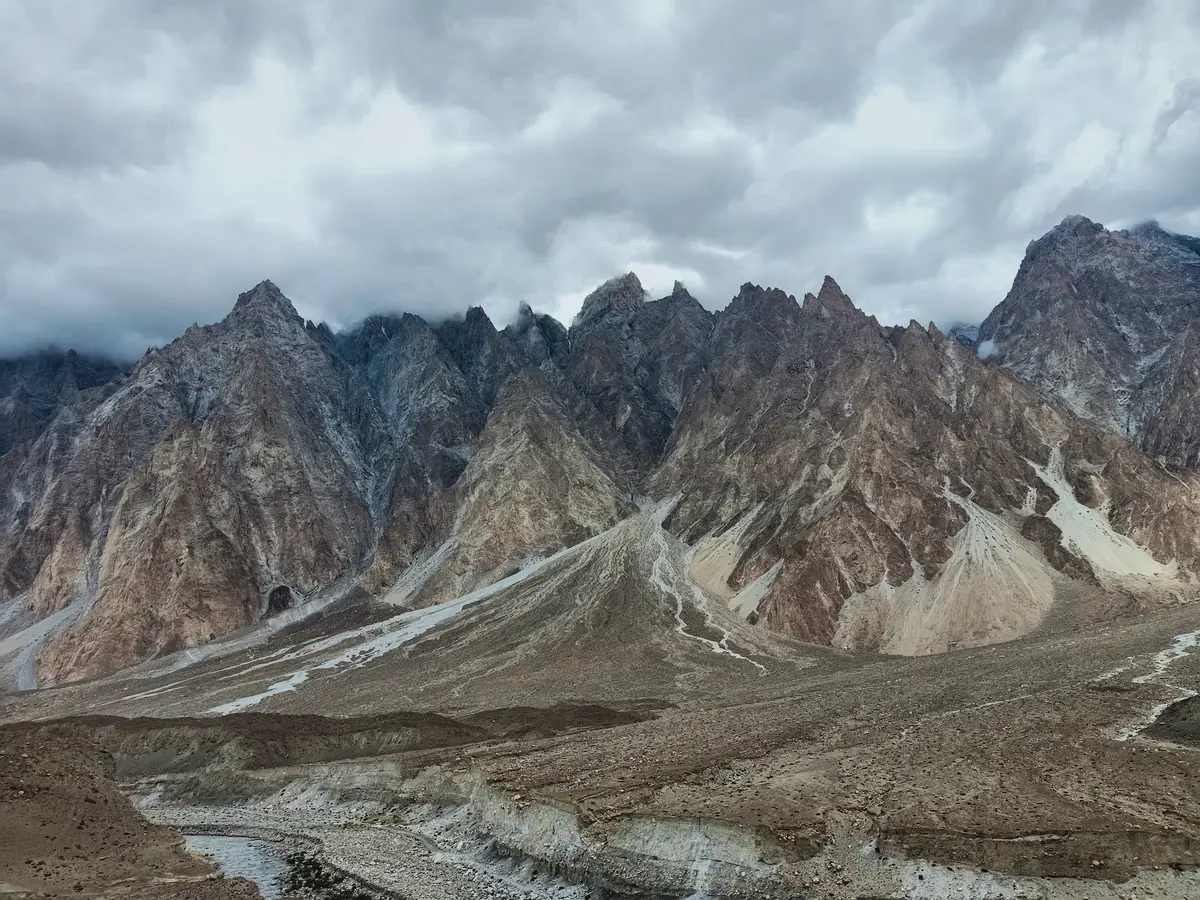
The primary trekking season here remains open from May until October. Because weather systems in the high mountains change quickly, keeping an eye on local landslide updates is essential. Exploring this area also provides a wonderful look into Wakhi culture, famous for its unique language, peaceful farming villages, and welcoming Ismaili Muslim community customs.
Head north from Gilgit along the well-paved Karakoram Highway (KKH) directly into Upper Hunza (~3 to 4 hours drive). Base out of Passu or neighboring Gulmit/Ghulkin villages; the trailheads begin right off the main highway or via a short drive to the Borith Lake junction.
The Harmosh Valley trek is a magnificent wilderness journey tucked within the dramatic Rakaposhi-Haramosh massif. This trail leads adventurers through dense pine forests and pristine alpine meadows up to the emerald green waters of Kutwal Lake, which sits directly beneath the massive walls of Haramosh Peak (7,409m), Laila Peak (6,096m), and Malubiting (7,458m). The ideal time to embark on this trek is from June to September when trails are clear and the lake is entirely accessible. For a complete breakdown of route maps, safety tips and itineraries, read our detailed Haramosh Valley travel guide.
The expedition begins at Sassi, a small village on the Gilgit-Skardu road. From Sassi, a rugged 4×4 jeep track leads to Dasu village, where the true hiking trail unfolds. Over a two-day ascent across moraines and alpine streams, you reach Kutwal Lake, a mirror-like lake reflecting towering snow walls. It is an amazing alternative option for travelers wanting to dodge crowded commercial trails.
Arrive in Gilgit, then drive southeast along the Gilgit-Skardu Road to Sassi Village (~1.5 to 2 hours). From Sassi, hire a local 4×4 jeep to navigate the rugged, narrow mountain track up to Dasu Village, where the walking route officially begins.
The trek to Fairy Meadows and onwards to the Raikot Base Camp of Nanga Parbat stands as one of the most iconic, high-reward travel experiences in Asia. Fairy Meadows is a stunning alpine grassland that offers a direct, clear view of the massive Raikot Face of the Killer Mountain. Plan this legendary trek with our fully optimized Fairy Meadows tour systems.
The journey kicks off at Raikot Bridge on the Karakoram Highway, followed by an exhilarating, world-famous 4×4 jeep ride to Tato Village. From Tato, a scenic 3-to-4-hour uphill walk through deep pine woods leads you right into the meadows. For an even grander perspective, you can continue hiking across the Raikot Glacier to the official Nanga Parbat Base Camp (3,967m) as a fulfilling day-trip.
The perfect operational window spans from April to October. While the main trail is well-maintained and highly accessible, packing proper thermal layers is crucial as alpine temperatures drop rapidly after sunset. The local Shina-speaking communities run cozy wooden log cabins and campsites, ensuring a highly authentic mountain experience.
Travel by road along the Karakoram Highway from Islamabad or Gilgit to Raikot Bridge. At the bridge, transfer into an authorized local 4×4 jeep for a thrilling 1.5-hour ride along the cliffside road to Tato Village, which acts as the definitive trailhead.
The Rakaposhi Base Camp trek (known locally as Taghaphari) offers one of the fastest routes to stand directly beneath a massive 7,000-meter peak. Rakaposhi (7,788m) features the tallest unbroken face of ice and snow on earth, rising cleanly from the valley floor.
The trail begins at Minapin Village, an exquisite valley settlement in Nagar along the Karakoram Highway. Unlike other treks that require expensive jeep transfers, you can start hiking directly from the local hotels in Minapin. A steady, well-defined path climbs through fertile fields and juniper woods up to the Taghaphari ridge (4,150m), where you camp right alongside the massive Minapin Glacier, facing the towering walls of Rakaposhi and Diran Peak.
This trail is best visited from June through October. The short 2-to-3-day total round-trip timeline makes it an excellent choice for hikers who want a genuine Karakoram glacier experience without committing to a multi-week expedition.
Take a 2-hour drive north from Gilgit along the Karakoram Highway directly into the Nagar Valley. Drop off at Minapin Village; no secondary jeep transfers are required here, as the foot trail begins directly from the steps of the village guesthouses.
For hikers wanting to venture off the beaten path, the Tirich Mir Base Camp trek explores the wild heart of the Hindu Kush mountain range. Tirich Mir (7,708m) stands proudly as the highest peak outside the Karakoram-Himalayan systems, lording over deep valleys and massive ice fields. Secure your custom itinerary today using our specialized Chitral tour packages. The best trekking timeframe for this dry Hindukush route spans from June to September.
The trek starts from Shagrom village in the remote Tirich Valley of Chitral. Over several days of rugged trekking across technical moraines and fast-flowing rivers, you reach Babu Camp (4,724m), named in honor of a legendary local mountain guide. This high camp provides an up-close look at massive rock walls and nearby peaks like Noshaq (7,492m) and Istor-o-Natal (7,403m).
Fly from Islamabad to Chitral town or drive via the Lowari Tunnel (~10 to 12 hours). From Chitral town, hire a local 4×4 jeep to travel through the rugged mountain canyons into the Tirich Valley to reach Shagrom Village (~5 to 6 hours), where the trek officially starts.
The Snow Lake trek (Lukpe Lawo) is a legendary, high-altitude glacial highway that tests the limits of wilderness explorers. Snow Lake is a massive, 77-square-kilometer basin of solid ice and snow sitting at 4,800 meters, feeding two of the longest non-polar glaciers in the world: the Biafo and Hispar Glaciated System. The ideal trekking season falls between June and September, offering the best stability and critical glacier visibility across the ice fields.
Starting from the famous expedition village of Askole in Shigar, trekkers spend over a week pulling sleds and navigating complex crevasse networks across the Biafo Glacier. The ultimate highlight involves ascending the high Hispar Pass (5,151m) before descending into the Nagar Valley. This demanding multi-week expedition rewards adventurers with unparalleled mountain wilderness scenery, far away from modern civilization.
Fly from Islamabad to Skardu (or travel the Karakoram Highway via road). From Skardu, take a rugged 6-to-8-hour 4×4 jeep ride into the Shigar Valley to Askole Village, the final roadhead. The expedition travels up the Biafo Glacier, crosses the high Hispar La pass, and exits via Hispar Village into the Nagar Valley, where jeeps wait to bring you back down to Gilgit.
The Baskochi trek is a short, exhilarating hike in Upper Hunza that rewards climbers with a magnificent bird’s-eye view of Attabad Lake’s bright turquoise waters. The lake was formed in 2010 after a massive landslide blocked the Hunza River, creating a striking deep-blue alpine lake nestled between sheer rock walls. The ideal trekking season runs from June to September to capture the absolute best colors of the lake under clear skies.
The trail begins near the automated Attabad Highway Tunnels. From there, a steep, zigzagging track climbs the mountain ridge to Baskochi Top (Balochi Top) at roughly 3,900 meters. The steep climb takes about 3 hours and rewards you with a panoramic view of the lake down below and the sharp Karakoram peaks framing the horizon.
Travel north from Gilgit along the Karakoram Highway straight to Attabad Lake in Upper Hunza (~2.5 to 3 hours). The trailhead climbs directly from the mountain ridge located immediately next to the main highway tunnel exits.
The Ratti Gali Lake trek is a breathtaking journey nestled within the enchanting alpine landscapes of Neelum Valley, Azad Kashmir. This highly popular trail leads outdoor enthusiasts through sprawling fields of vibrant wild alpine flowers, rushing streams, and dense pine forests up to a stunning glacial lake sitting at 12,130 feet above sea level. The ideal time to embark on this scenic route is from May to October when the high mountain passes are completely clear and the alpine meadows are in full bloom. To discover detailed route maps, camping tips, and custom itineraries, explore our comprehensive Ratti Gali Lake travel guide.
The expedition treats adventurers to an unforgettable wilderness experience right at the lake’s dedicated base camp, where crystal-clear glacial waters seamlessly mirror the massive, snow-capped peaks surrounding the bowl. Whether you choose to challenge yourself on foot across the green slopes or opt to hire a local horse for the final leg, the first view of this shimmering, deep blue jewel is an iconic bucket-list moment. It serves as the ultimate route for travelers wanting to experience the lush, green paradise side of Pakistan’s diverse mountain landscapes.
Travel from Islamabad to Muzaffarabad, then drive north along the Neelum Valley highway to the village of Dowarian. At Dowarian, rent a local 4×4 jeep to navigate the thrilling, rugged 2-hour mountain track that winds up to the Ratti Gali base camp. From the base camp, the official foot journey requires a moderate 2-hour hike or horse ride to reach the lakeside.
The Rush Lake trek is an extraordinary alpine journey that leads to one of the highest altitude lakes in the world, nestled deep within the magnificent Nagar Valley of Gilgit-Baltistan. This trail is a dream for high-altitude adventurers, guiding you through dramatic glacial landscapes up to a breathtaking mountain bowl sitting at an elevation of 4,694 meters. The ideal time to experience this striking Karakoram wilderness is from mid-June to late August when the trails are clear of heavy snow and the alpine pastures come alive. To plan your mountain adventure seamlessly, discover our fully managed Rush Lake trek tour package.
The trail begins with an exciting trek directly across the surface of the rumbling Hopar (Bualtar) Glacier before climbing steeply into the vibrant alpine ridges of the ridge camp. Reaching the pristine waters of Rush Lake rewards you with an unmatched 360-degree panoramic view of the Karakoram giants, including Spantik (Golden Peak), Malubiting, and Ultar Sar. It stands out as an incredible destination for trekkers who love dramatic elevation changes and wild, high-altitude camping, with many electing to climb the easily accessible Rush Peak (5,098m) sitting just above the lake.
Travel north from Gilgit along the Karakoram Highway toward the Hunza-Nagar district. Take the turn-off toward Nagar Valley and proceed down the asphalt road to Hopar Valley. Hopar Village serves as the official trailhead and the final point accessible by vehicles, where you will meet your local guides and porters to begin the foot journey.
The Karomber Lake trek is a remote expedition connecting the Ishkoman Valley of Ghizer with the Broghil Valley of Chitral. This trail takes you through quiet alpine country to a massive lake resting at 4,300 meters on the edge of the Wakhan Corridor. The prime window to visit is from July to September when the high passes are clear of snow. If you are looking for a fully guided itinerary, you can view our Karomber Lake trek tour package.
The trail moves from narrow rocky sections into wide pastures where Wakhi herders graze their livestock. Karomber Lake itself stretches over two miles long and reflects the surrounding peaks. It is a rugged border trek built for experienced hikers who want a true wilderness trip far away from busy commercial trails.
Drive from Gilgit through Ghizer to the final jeep stop at Mitram Village. Alternatively, you can access the trail from the Chitral side by taking a 4×4 vehicle through the rugged tracks of the Broghil Pass, starting on foot from there.
The Dudipatsar Lake trek is a popular trail in the northern part of the Kaghan Valley within Khyber Pakhtunkhwa. Often called the “Queen of Lakes,” this route follows the valley floor and mountain streams up to an alpine lake at 3,800 meters. The best time to visit is from late June to early September when the summer sun clears the snow and opens the high pastures. If you want a hassle-free trip, you can check out our Dudipatsar Lake trek tour package.
The trail runs through Lulusar-Dudipatsar National Park, passing green meadows, waterfalls and local livestock pastures. The lake itself sits in a bowl surrounded by sharp, snow-dusted peaks. It is a solid choice for intermediate hikers looking for a rewarding multi-day camping trip without extreme technical climbing.
Drive north from Islamabad along the Hazara Motorway and take the Naran-Kaghan Highway past Naran town. Continue toward Babusar Pass until you reach Besal, a small roadside stop with a local hotel. Besal is the official trailhead where you cross the river to start walking.
The Jahaz Banda trek is a popular route that climbs through the pine forests and high pastures of the Upper Dir District in Khyber Pakhtunkhwa. Serving as an entry point to the Kumrat Valley region, this trail takes hikers up to a wide meadow before continuing to Katora Lake at 3,550 meters. The best time to visit is from June to September when the meadows are green and the lake is clear of solid ice. To look at options for your trip, see our Jahaz Banda trek tour package.
The trail starts under thick cedar trees and climbs steadily before opening into a large meadow where local wooden lodges and campsites are located. The main day-hike from the meadows goes up to Katora Lake, a large glacial lake fed by melting snow walls. This is a great route for beginners and domestic travelers who want to see high-alpine scenery without a grueling glacial expedition.
Travel from Islamabad via the Swat Motorway, exit toward Upper Dir, and drive to Thal bazaar. From Thal, hire a local 4×4 jeep to handle the rough mountain track along the river to Jandrai Village, which serves as the base and starting point for the hike.
Before booking your journey into the Karakoram, Hindu Kush, or Himalayan regions of Pakistan, here is the baseline breakdown of what to expect across our various trekking packages.
Note on Safety: Every single expedition departure includes a mandatory high-altitude first-aid kit, emergency satellite communication tracking, and a dedicated kitchen crew trained in hygienic mountain meal preparation.
From the granite spires of the Karakoram to the lush alpine meadows under the Himalayas, Pakistan remains an undisputed global paradise for adventure travel. Upgrading your trekking holiday with local expert guides guarantees top-tier safety, smooth permits, and a rich, deeply authentic journey through one of the most spectacular mountain landscapes on earth.
It depends on the zone. Open zones like Hunza Valley, Swat, Kaghan, and Skardu city do not require advance permits for international travelers; a standard tourist visa is sufficient. Restricted zones—including the Baltoro Glacier (K2 Base Camp), Gondogoro La, and routes within 10 miles of the Line of Control (LoC) or border corridors—require a formal Trekking Visa and an NOC. These must be processed through a licensed Pakistani tour operator at least 4 to 6 weeks before arrival.
The primary trekking window runs from mid-June to mid-September. During these summer months, high alpine passes (above 4,000 meters) are generally clear of winter snow, and temperatures are manageable. Outside of this window, early spring and autumn bring freezing temperatures at altitude and high risks of blocked passes.
The standard weight limit for a single porter is 25 kg (55 lbs). This includes your trekking gear, sleeping setup, and personal items. If your packed gear exceeds this limit, you will need to pay for an additional porter or split the load.
Yes. The northern areas (Gilgit-Baltistan and Khyber Pakhtunkhwa) are heavily cash-based. While ATMs are available in main hubs like Gilgit, Skardu, and Chilas, they frequently experience connectivity issues or power outages. You must carry sufficient Pakistani Rupees (PKR) in cash before leaving major towns to cover tips, local purchases, and emergency expenses in remote valleys.

Saba Ghani is Senior Content Editor at Pakistan Tour and Travel. With expertise in travel writing, she creates inspiring content that connects with audiences. Reach her at saba@pakistantourntravel.com or Twitter








12 Years of Tourism Services
Government of Pakistan, DTS License ID-2650