Table of Contents
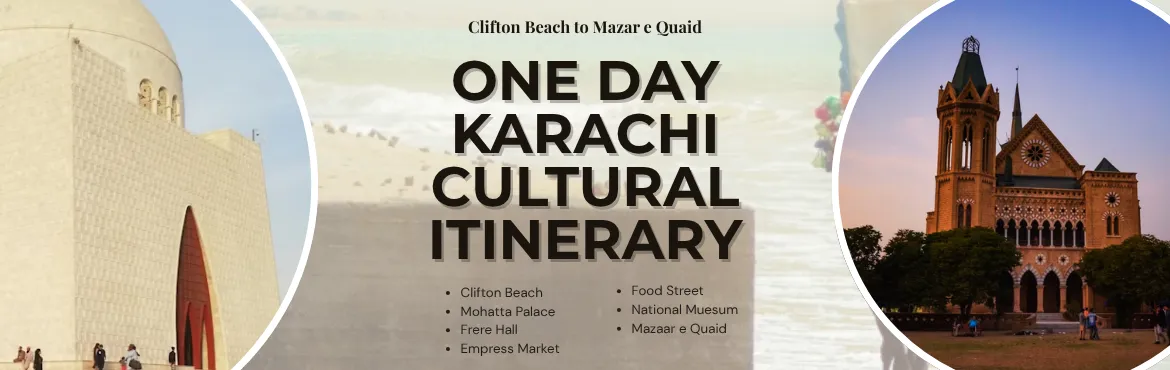
If there’s one city that truly captures the pulse of Pakistan, it’s Karachi. It’s not just the country’s largest city, it’s its cultural engine. Languages blend here, traditions overlap, and stories from every corner of Pakistan find a voice in its streets. This one-day Karachi Cultural tour is designed for those who want more than just sightseeing. It’s for travelers who want to feel the city, its energy, its history, and its contradictions.
From the calm shoreline of Clifton Beach to the quiet dignity of Quaid’s Mausoleum, this Karachi cultural itinerary offers a complete, immersive experience in just one day.
If you’ve been searching for a meaningful heritage tour of Karachi or a practical yet rich Karachi travel guide, this journey will give you both structure and soul.
Start your Cultural tour early at Clifton Beach, when the city is still stretching into the day.
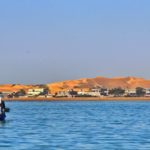
The first thing you notice isn’t the view, it’s the feeling. The air carries a mix of salt and street food, and the sound of waves blends with distant chatter. It’s peaceful, but not silent. Karachi is never truly silent.
Walk along the damp sand as the sun slowly rises over the Arabian Sea. Vendors begin setting up their stalls, chai is poured into small cups, and camel handlers prepare for the day ahead. There’s something grounding about this place, it doesn’t try to impress you, yet it stays with you.
Leaving the beach behind, your journey moves into a different rhythm at Mohatta Palace.
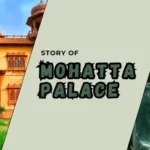
As you step through its gates, the noise of Karachi softens. The transition is almost immediate. Built in 1927 by Shivratan Mohatta, this palace feels like a preserved memory of a different Karachi, one of elegance, design, and quiet sophistication.
The building itself is the first thing that captures you. Pink sandstone walls, detailed carvings, domes, and symmetrical balconies, all carefully crafted with influences from Rajput and Mughal architecture. It doesn’t just look beautiful, it feels intentional.
Inside, the atmosphere changes again. The halls are calm, the lighting is soft, and the exhibitions shift your attention from architecture to ideas.
The Mohatta Palace adds depth to your Cultural tour. It’s not just about looking; it’s about understanding how Karachi evolved from a colonial port city into a modern cultural hub.
From royal elegance, you move into colonial charm at Frere Hall. There’s a noticeable shift in pace here. The building stands quietly, surrounded by greenery, offering a rare moment of calm in a fast-moving city.
Built in 1865, Frere Hall reflects British-era architecture, but its current identity is far more local. It’s no longer a symbol of colonial authority; it’s a space for community.
You’ll see students reading under trees, families relaxing in the gardens, and book vendors setting up stalls on weekends. Inside, the library holds echoes of the past, while the famous ceiling mural by Sadequain (when accessible) adds an artistic dimension that surprises many visitors.
Visit on a Sunday if you want to experience the book stalls and local crowd, but expect more people.
If Clifton Beach is calm and Frere Hall is reflective, then Empress Market is pure energy. As you enter the Saddar area, everything intensifies: sounds, colors, movement. The market, built during the British era and named after Queen Victoria, stands tall with its clock tower, but the real experience lies inside.
Here, Karachi feels alive in the loudest way possible. Vendors call out prices, customers negotiate, spices fill the air, and narrow pathways force you to move with the crowd. It’s chaotic, but it’s also incredibly real.
Karachi’s best meals are rarely found in luxury restaurants. They’re in small, busy places where recipes haven’t changed in decades. After navigating the market, it’s time to recharge, and in Karachi, food isn’t just a break, it’s an experience. Head toward Saddar or Burns Road for an authentic meal.
Your Cultural tour continues at the National Museum of Pakistan, where Karachi connects to a much older story. After the chaos of Saddar, the museum feels structured and quiet. Each gallery takes you further back in time, from the Indus Valley Civilisation to Islamic heritage.
This stop transforms your Karachi cultural itinerary into something bigger, it shows that Karachi isn’t just a city, but part of a long historical continuum. Take your time here. It’s easy to rush through, but the details are where the value lies.
End your journey at Mazar-e-Quaid, the resting place of Muhammad Ali Jinnah. After a full day of movement, this place feels different. Open, quiet, and balanced. The white marble structure stands in contrast to everything you’ve seen, simple yet powerful. The gardens surrounding it create space, not just physically, but mentally. People walk slowly here. Conversations soften. It’s less about sightseeing and more about reflection.
Visit around sunset. The lighting, the temperature, and the atmosphere all come together beautifully.
The best Cultural tour in Karachi is a one-day journey from Clifton Beach to Quaid’s Mazaar, covering Mohatta Palace, Frere Hall, Empress Market, and the National Museum.
Yes, a well-planned Karachi cultural itinerary can cover major landmarks in one full day, though more time allows deeper exploration.
Karachi stands out for its diversity, blending coastal life, colonial history, modern art, and vibrant street culture in one city.
Karachi isn’t a city you fully understand in a day, but it’s a city that stays with you after one.
This Cultural tour doesn’t just show you landmarks; it introduces you to contrasts. Calm and chaos. History and modern life. Silence and noise. If you’re ready to experience Karachi beyond the surface, this itinerary is your starting point. Plan your own Karachi cultural itinerary or hire us for a hassle-free journey and take the first step into Pakistan’s rich and layered heritage.

Saba Ghani is Senior Content Editor at Pakistan Tour and Travel. With expertise in travel writing, she creates inspiring content that connects with audiences. Reach her at saba@pakistantourntravel.com or Twitter








12 Years of Tourism Services
Government of Pakistan, DTS License ID-2650