Table of Contents
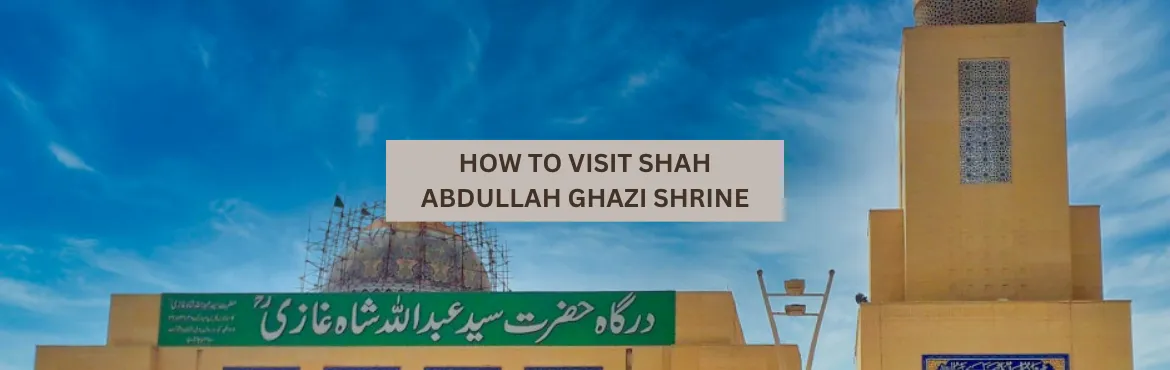
If you’re planning a Cultural tour of Karachi, one place you simply can’t skip is the iconic Abdullah Shah Ghazi Shrine. Perched near the Arabian Sea, this shrine isn’t just a religious site; it’s a living, breathing cultural experience that reflects the soul of the city.
There are places in Karachi where the city slows down for a moment. Abdullah Shah Ghazi Shrine in Clifton is one of them. Outside, traffic moves toward Sea View, Clifton, and the busy roads around Teen Talwar. Inside, the sound changes: footsteps on stairs, whispered prayers, green flags moving in the breeze, vendors calling softly, and the scent of flowers, incense, and sea air mixing together.
The Abdullah Shah Ghazi Shrine Karachi is not just a religious site. It is one of the city’s most emotional landmarks, visited by locals, pilgrims, families, spiritual seekers, and tourists who want to understand Karachi beyond malls, beaches, and food streets. It is one of Karachi’s foremost shrines, visible from around Jehangir Kothari Parade, and “much older than the city itself.
For locals, it’s a place of devotion and hope. For travelers, it’s a window into Karachi’s layered identity, where spirituality, history, and everyday life come together. Whether you’re on a Southern Pakistan tour or exploring the city independently, visiting this shrine offers a unique blend of tradition and energy you won’t find anywhere else.
Hazrat Abdullah Shah Ghazi is remembered as an 8th-century Sufi saint associated with Sindh and Karachi. Accounts of his life vary across oral tradition, devotional history, and written sources, but most traditions describe him as a noble descendant of the family of the Prophet Muhammad ﷺ through Imam Hasan. Most importantly, the devotional belief is that he was a grandson of Imam Hasan and migrated to Karachi during the Umayyad period
Some historical traditions identify him with Abdullah al-Ashtar, connected to Muhammad al-Nafs al-Zakiyya, and say he came from Medina to Sindh in the 8th century. He arrived in Sindh around 760 and his body was later buried on a hillock near the coast.
For devotees, however, Abdullah Shah Ghazi is more than a historical personality. He is Karachi’s patron saint, a spiritual protector watching over a restless port city. His title “Ghazi” is often understood as a defender or warrior, but in Karachi’s popular memory he is also a saint of compassion, shelter, and courage.
Locals tell stories of his miracles with deep affection. One of the most famous beliefs is that his presence protects Karachi from cyclones coming from the Arabian Sea. Many devotees believe storms have weakened, shifted, or bypassed Karachi because of the saint’s spiritual protection. Another popular miracle tells of fresh water appearing near the hill when the area was surrounded by sea and drinking water was scarce.
Whether you approach these stories as faith, folklore, or cultural memory, they explain why the shrine feels so important to Karachiites. It is a place where people bring fears they cannot easily explain elsewhere.
Long before Clifton became one of Karachi’s most expensive and recognizable districts, the saint’s resting place stood on a sandy coastal hillock. The original mausoleum was later replaced in the 19th century by a square structure with a green dome.
For much of its earlier life, the shrine was modest. As a tiny hut on a sandy hill until the early 1950s, before later governments and custodians expanded and beautified it. In the mid-1960s, as Karachi grew rapidly and migrants from across Pakistan settled in the city, the shrine became a stronger center of devotion, music, small shops, and community gatherings.
During the 1970s, the shrine expanded further and became one of Karachi’s largest Sufi shrines, attracting Muslims and visitors from Christian and Hindu communities. This is one reason the shrine matters culturally: it reflects the inclusive, public, street-level spirituality that has long shaped Sindh.
The shrine also carries memories of resilience. It survived neglect, urban change, political shifts, and even violence. In 2010, it was attacked by militants, yet it continued to draw devotees. Dawn described how the shrine survived and remained a place for Karachi’s working-class and lower-middle-class visitors, the homeless, and the downtrodden.
Over centuries, the shrine has evolved into more than just a religious monument; it’s a cornerstone of Karachi’s identity. People from all walks of life visit:
There’s a timeless rhythm here. Stories of faith, resilience, and community echo through the corridors, making it a deeply human experience rather than just a historical stop.
To understand the shrine, do not visit it only as a building. Watch the people. You will see someone tying a thread, someone placing flowers, someone sitting silently with closed eyes, someone feeding others, someone touching the silver railing around the grave with tenderness. Dawn’s photo essay on the shrine describes how people arrive by car, bus, rickshaw, bicycle, on foot, and even on crutches to pray for health, financial relief, legal success, family wishes, and everyday problems.
This is why the shrine became a place of healing and hope. Not everyone who visits can afford private therapy, expensive doctors, or powerful contacts. But anyone can climb the stairs, offer Fateha, sit in the courtyard, and feel that their pain has been heard.
The shrine’s langar, or tradition of free food, is another important part of its spiritual identity. Food served at shrines is not just charity; it is a symbol of equality.
Expect crowds, especially on Thursdays and weekends. The air is filled with:
It’s lively but not chaotic. There’s a sense of calm within the movement, something that’s hard to explain until you feel it yourself.
The shrine stands on an elevated site, which gives it a distinctive presence in Clifton. You approach it through flower stalls and a pathway leading toward long stairs. There is a compound, flower shops, steps, a sepulchral chamber, and a prominent green cupola. Architecturally, it blends old shrine culture with modern renovation. Moreover, the shrine is a high square chamber with a green-and-white striped dome, Sindhi tilework, flags, and buntings. The atmosphere is sensory. In the afternoon, sunlight hits the tiles sharply. Near evening, the crowd softens into a devotional rhythm. On Thursdays and during Urs, the shrine becomes louder, fuller, and more emotional. The shrine’s structure is instantly recognisable:
One of its most unique features is its coastal location. Just a short walk away, you’ll find views of the Arabian Sea, adding a refreshing contrast to the spiritual setting.
The Urs is the annual commemoration of a Sufi saint’s passing from this world. In the Sufi tradition, death is not merely an ending; it is remembered as a union with the Divine. That is why Urs gatherings often feel both spiritual and festive.
The Urs of Abdullah Shah Ghazi is traditionally observed from 20 to 22 Zilhaj / Dhu al-Hijjah. The Express Tribune reported this three-day pattern, and The News also notes that the Urs is observed every year between Zilhaj 20 and 22 at the Clifton shrine.
For Urs Abdullah Shah Ghazi 2026, the expected Gregorian dates are Saturday, 6 June to Monday, 8 June 2026, corresponding to 20–22 Dhu al-Hijjah 1447 in a published Hijri calendar. Because Islamic dates depend on moon sighting and official local announcements, travelers should confirm with Sindh/Karachi authorities or local news closer to the event.
During Urs, tourists can expect:
In previous Urs coverage, rituals included bathing the tomb, laying floral wreaths and chadar, and prayers by officials and devotees. The News also describes qawwali, milad, distribution of food and drinks, and visitors coming from Karachi, interior Sindh, and other parts of Pakistan.
Outside the shrine, the experience continues:
This is where your Karachi shrine visit becomes more than just sightseeing it becomes a full cultural immersion.
Respecting local customs is key:
The shrine is located in Clifton, Karachi, near the Sea View / Jehangir Kothari Parade side of the city. You have multiple transport options:
International visitors are welcome, but the space is devotional, not a staged tourist attraction. A local guide can help explain customs and translate signs or conversations. Nearby accommodation options are available in Clifton, DHA, and the wider Karachi South area.
You can expect a vibrant mix of spirituality, culture, and local life at Abdullah Shah Ghazi Shrine, featuring qawwali music, a lively crowd, simple architecture, and nearby street food vendors. A few simple rules will make your visit smoother:
For things to do near Clifton Karachi, combine the shrine with:
Responsible travel matters at sacred places. The best way to practice Karachi spiritual tourism is to be humble. Do not treat poverty, devotion, or rituals as photo props. Avoid blocking worshippers for selfies. Buy from small vendors rather than bargain aggressively. Use reusable water bottles where possible, and never leave plastic bags, flower packaging, or food waste behind. The shrine belongs first to the people who pray there. As a visitor, you are being allowed into their emotional and spiritual space.
Karachi is often misunderstood as just a busy мегacity but places like the Abdullah Shah Ghazi Shrine tell a different story. They reveal a city rooted in history, spirituality, and human connection.
Adding this shrine to your Southern Pakistan tour isn’t just about ticking off a landmark; it’s about experiencing Karachi at its most authentic.
So next time you’re planning a Karachi cultural tour, make sure this iconic shrine is on your list. And while you’re at it, dive deeper, explore the streets, taste the food, and uncover the layers of a city that never stops surprising you.

Saba Ghani is Senior Content Editor at Pakistan Tour and Travel. With expertise in travel writing, she creates inspiring content that connects with audiences. Reach her at saba@pakistantourntravel.com or Twitter





12 Years of Tourism Services - DTS License # 8135