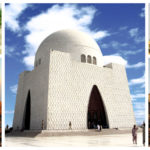
Motorway M-1 Peshawar-Islamabad
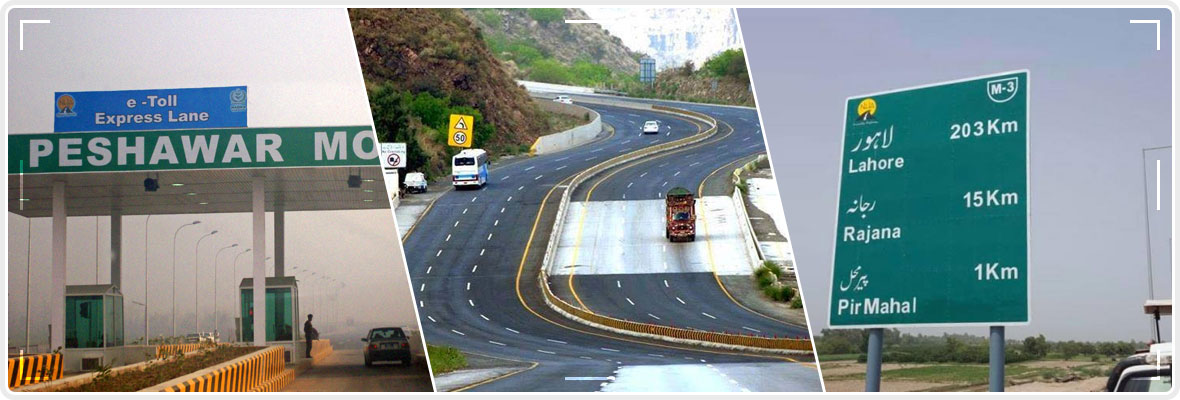
The Peshawar-Islamabad highway is 155 kilometers long and has 14 Interchanges. The M1 Peshawar-Islamabad Highway (Peshawar-Islamabad Highway) starts from the Peshawar Ring Road in the northeast of Peshawar.
It is 155 kilometers long and has 14 connections, including the Peshawar Ring Road and the Peshawar North Ring Road. Charsadda, Rashakai, Sawabi, Chaka, Ghazi, Hazara Expressway (E-35), Burhan (Hassanabdal/Kamra), Burma, Bhatar, AWT/Sanjiani/Paswal and Islamabad’s airport connection road. The M-1 highway between Peshawar and Islamabad crosses Kabul, Haro, and the Indus with the help of three main bridges.
In addition to these Interchanges and bridges, the highway also contains 27 bridges, 137 tunnels, 18 bridges, and 571 canals.
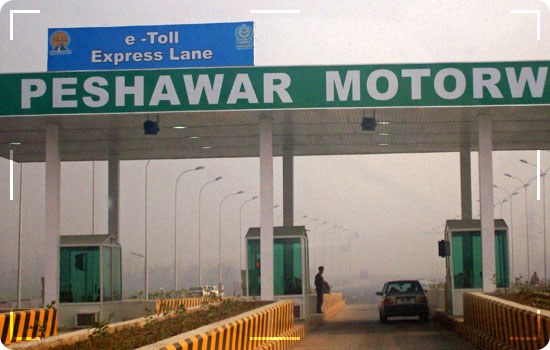
Motorway-M-1-Peshawar-Islamabad
M2 Lahore-Islamabad Highway
The M-2 Islamabad-Lahore highway was the first highway built in South Asia in 1997. It passes through the wooded areas of Punjab and stretches for 375 kilometres.
This is a 6-lane highway with 22 interchanges at various points, such as the M2 Interchange. M1, Islamabad, Thalian Exchange, Chakri Exchange, Neelah Dullah M2 Exchange, Balkasar Exchange, Kallar Kahar Exchange, Lilla Exchange, Bhera Exchange, Saalam Exchange, Kot Momin Exchange, Makhdoom Exchange, Pindi Bhattian Exchanges, M-4 Pindi Bhattian-Multan Exchange, Sukheki, 4 Pindi Bhattian-Multan interworking, Khanqah Dogran interworking, Hiran Minar interworking, Sheikhupura interworking, Kala Shah Kaku interworking, Kot Abdul Malik interworking, Faizpur interworking, M-3 Lahore -Abdul Hakeem Highway, Babu Sabu Interchange and M2 Zero Lahore.
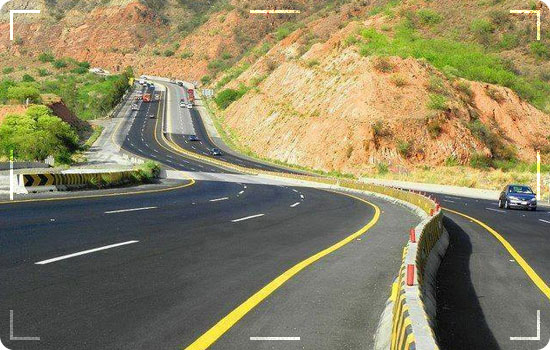
M2 Lahore Islamabad
Gas stations and service areas are located at five points on the Lahore-Islamabad M-2 highway on both sides of the road. These stations include the Sukheki service area, Sial service area, Bhera service area, Kalar Kahar service area, and Chakri service area.
The average distance between the service area and the refueling area is 60 to 80 kilometers. Some of Pakistan’s most famous restaurants have shopped at these stations on the M2 highway in Lahore, Islamabad.
M-3 Lahore-Abdul Hakim Motorway
The M3 highway opened in March 2019 and spanned 230 kilometers between the city of Abdul Hakim and Lahore. The highway starts at the M2 highway junction in Lahore and connects to the Pindi Bhattian-Multan highway junction with the M4 highway. In slavery. Wise man. It is also a six-lane highway with three rest areas and four interchanges along the way, including Shah Shams Tabriz Interchange, Vehari Road Interchange, Bahawalpur road Interchange and Sher Shah Interchange.
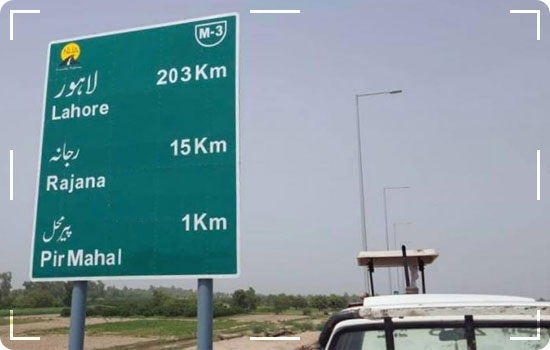
M3 Lahore Abdul Hakim
M-4 Pindi Bhattian-Multan Motorway
The M-4 Pindi Bhattian-Multan Expressway is 309 kilometers long and relies on 4 lanes on both sides of the road for traffic. It is a road connection between different cities in Punjab, such as Rawalpindi, Faisalabad, Toba Tek Singh, Shorkot, Khanewal, Abdul Hakim, and Multan.
Like other popular highways in Pakistan, there are more than a dozen Interchanges along the M-4 highway, connecting some of the most important road networks, including M-2, M-3, and M-5.
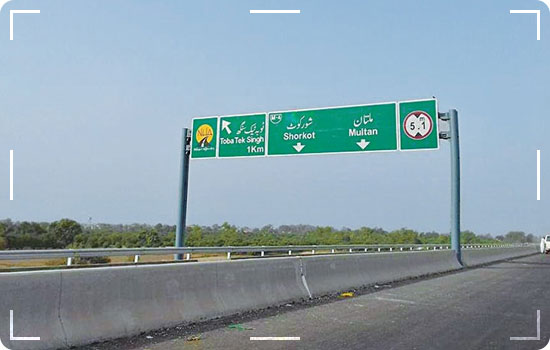
M-4 Pindi Bhattian-Multan Motorway
M-5 Multan Sukkur Motorway
The M-5 Multan-Sukkur road is 392 kilometers long, which is only part of the proposed road between Karachi and Peshawar, with a total length of 1,100 kilometers. The M-5 highway is one of the main projects of the China-Pakistan Economic Corridor because it greatly reduces the transportation time from the Karakoram highway to Karachi and Gwadar.
This is a 6-lane highway with 11 interchanges connecting different cities in Punjab, including Multan, Jalalpur Peerwala, Ahmed Pur East, Rahim Yar Khan, Sadiqabad, Pano Aqil, Ubaro and Sukkur.
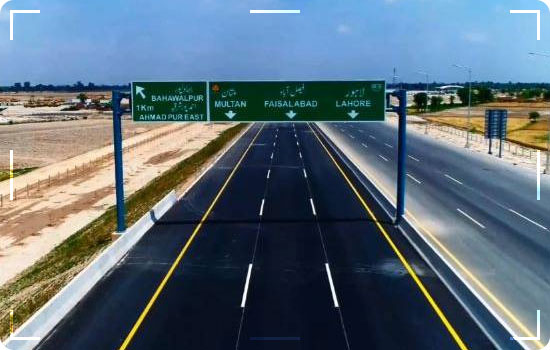
M-5-Multan Sukkur-Motorway
M-9 Karachi Hyderabad Motorway
The M9 Hyderabad-Karachi highway is 136 kilometers long and has a 6-lane motorway. It is one of the most important Pakistani Motorways connecting Karachi and Hyderabad, two major cities in Sindh.
It is built on the existing highway between Karachi and Hyderabad. The improvement of the expressway led to the creation of a 136-kilometer-long expressway consisting of 6 lanes with controllable entrances and exits at 8 Interchanges along the road. Some major housing communities are also located on the outskirts of Karachi along the M-9 highway, including the town of Bahria, Karachi, and DHA.
With a very modern infrastructure, one of the longest overpasses in South Asia has recently opened to traffic on Highway 9. The overpass establishes a connection from Karachi (Bahria Town), Sukkur to the direct road. This is Pakistan’s first exchange, funded by a private real estate developer.
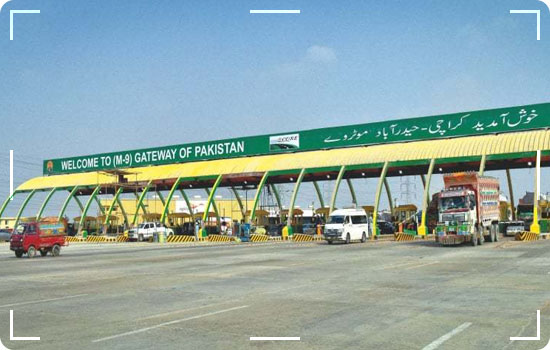
M-9-Karachi-Hyderabad-Motorway
In order to facilitate travel, the part of the highway that crosses the Interchange is a 400-meter-wide two-way road with 18 lanes. This section is also equipped with 8-foot-high fences and 3-foot-high handrails to make the transfer safer. In addition, the architecture of the newly developed Interchange was inspired by Sheikh Zayed Road in Dubai.
Karachi Northern Bypass M-10
The Karachi North Ring Road is directly connected to the M-9 Karachi-Hyderabad Highway and Karachi Port. This route offers operators the fastest option to move between two destinations. Recently, the National Highway Administration (NHA) granted the status of this bypass highway, which is now officially recognized as the M-10 Karachi highway.
The M-10 motorway extends from Muhammad Ali Jinnah Road to KPT Bridge and has three main Interchanges, including junction M9, Trumpet interchange, and junction N-25.
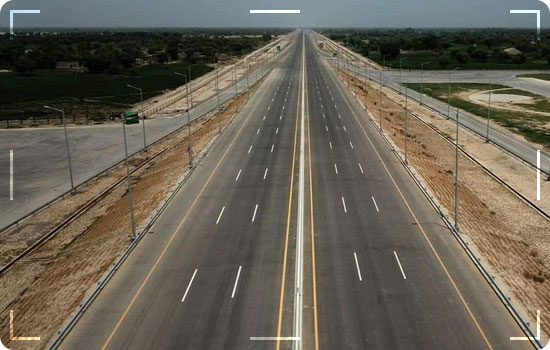
Karachi-Northern-Bypass-M-10
Havelian-Mansehra section of the Hazara Highway
The Hazara Highway is an important part of the China-Pakistan Economic Corridor (CPEC). This project is a high-level, high-level, late-stage development project of the Karakoram Expressway. The expressway is a major part of the China-Pakistan Economic Corridor and an important part of the north-south trunk road network.
The construction of this project will greatly promote the development of the local economy and the development of national urbanization.
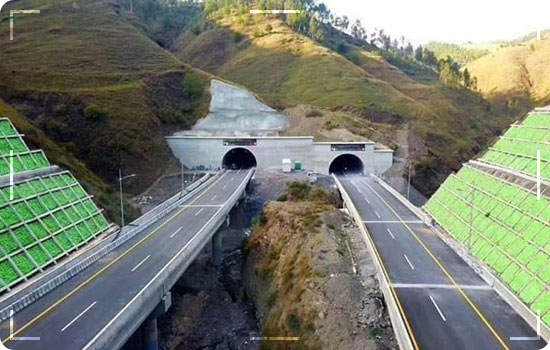
Havelian-Mansehra-section-of-the-Hazara-Highway
The highway consists of two parts. The first part, from Havelian to North Abbottabad, is 27,425 kilometres long, while the second part runs from North Abbottabad to Mansehra and is 11,880 kilometres long. On this highway, there are 3 junctions, 47 bridges, 12 bridges, 143 tunnels, and 4 toll stations.
Final Words:
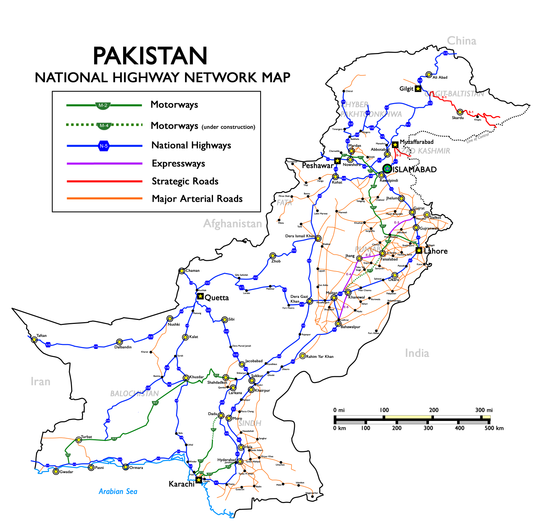
Pakistan’s road network has a total length of 3,714 kilometres, including all the above-mentioned intercity roads, of which 1,870 kilometres are in operation. However, planning and development of the remaining highways are progressing rapidly. At the current rate of progress, it is likely that Pakistan will complete all these roads within a few years.
As mentioned in the table above, roads under construction in Pakistan include M-8 Ratodero-Gwadar, M-11 Kharian-Lahore, and M-14 Hakla-D.I., some of which are also partially operational. Khan, Hazara Hassan Abdal Thakot Road.
This concludes with an overview of all major roads and inter-city highways in Pakistan. What other measures do you think should be taken to improve the country’s intercity travel experience?
If you are a travel fan, don’t miss reading our blog to learn about some of the most amazing and underrated tourist destinations in Pakistan.